How to Manage Restaurant Staff: Practical Tips for Smooth Operations
how to manage restaurant staff
Last updated: September 2026
Friday, 8:40pm. Two waiters on the floor, one on his phone in the corridor, and nobody knows which one of them promised table 9 that the biryani was ten minutes away.
How you manage restaurant staff on a night like that comes down to one question: are the rules in your head, or in a system everyone can see?
Most restaurant problems that look like kitchen problems are staff problems wearing a kitchen costume. The dish went out cold because nobody told the waiter it was ready. The bill was short by ₹340 because someone gave a discount they should not have. The new boy quit in week six because nobody had told him what a good shift looked like.
None of that is fixed by hiring harder. It is fixed by making expectations obvious and hard to get wrong, then letting a system do the checking instead of you standing at the pass every night.
And the cost of getting it wrong is not small. Restaurant attrition in India ran at 60% in 2023, up from a 50–55% average, according to TeamLease Services — in a sector employing 85.5 lakh people, the country's second-largest employer, on NRAI numbers. Ten people on your floor today, six gone within a year.
Here is how to manage restaurant staff in a way that survives a full Saturday.
The short version
- Roster stations, not headcount. Four calm people beat six confused ones.
- Train on a checklist, not a speech — twelve things across day one, week one, month one.
- Mark attendance where the work happens, so the salary sheet builds itself.
- Decide who can void and who can discount before you need the answer, and log every one.
- People leave over predictability, not pay alone. A rota published on Sunday holds more staff than a raise.
- CurryIQ gives every role its own login, so the rules live in the software, not in your head.
START FREE — NO CARD NEEDED
Put the rules in the system, not in your head. Roles, shifts, order-taking and GST-correct billing in one browser-based system. Setup takes about ten minutes.
How do you manage restaurant staff effectively?
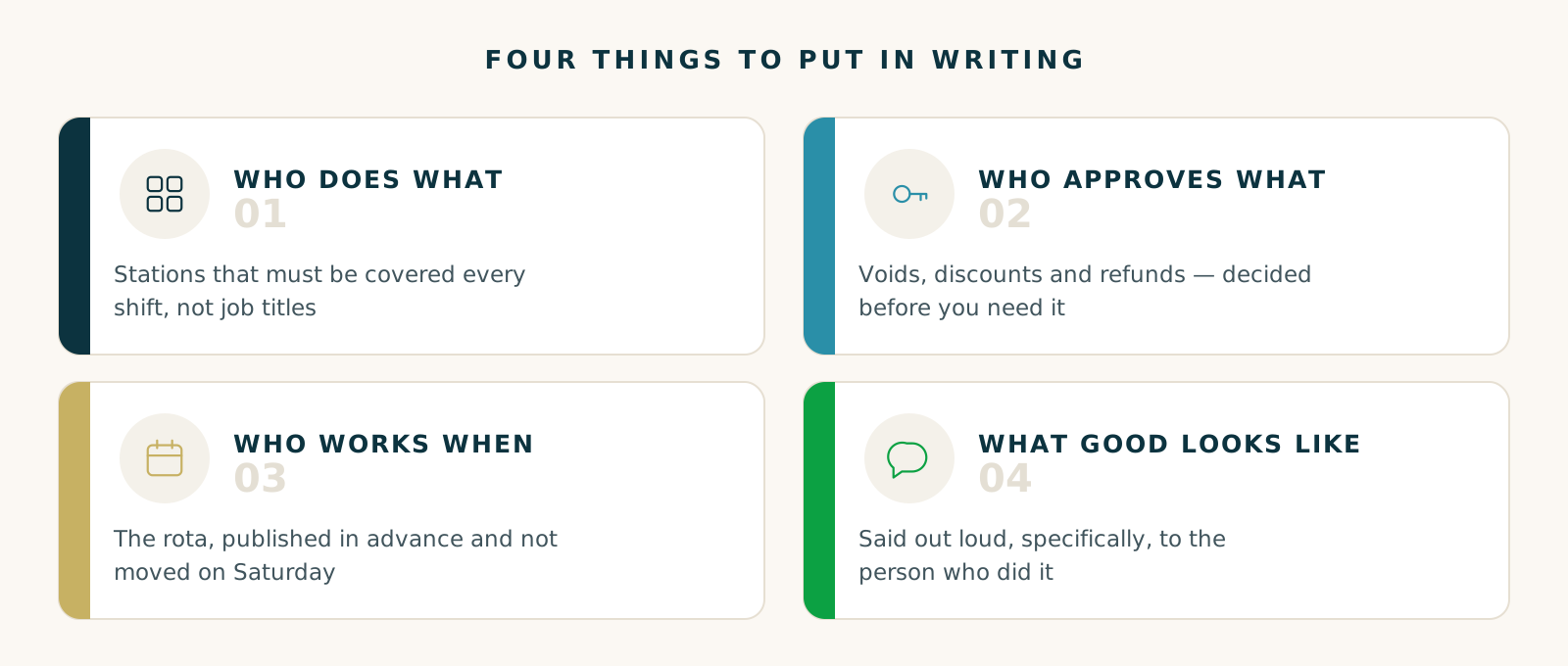
You manage restaurant staff by defining four things in writing — who does what, who approves what, who works when, and what "done well" looks like — and then putting all four into a system everybody can see. Verbal instruction does not survive a rush. Written rules that live in the POS do.
Most owners manage by presence — standing near the counter, correcting things as they happen. It works right up until you have two branches, or a fever. The test is simple: can the restaurant run a normal Saturday without you on the floor? If not, what is missing is not effort. It is structure.
The sections below are that structure, in the order worth building them.
How many staff does a restaurant actually need?
Fewer than most owners think.
A common rule of thumb for Indian casual dining is one waiter for every four to five tables, and one for every three at peak if the menu is long. A 30-seat restaurant running about 8 tables usually needs two on the floor, three on a Saturday.
But the number that matters is not staff per table, it is staff per station. Count the jobs, not the people: someone takes orders, someone runs food, someone bills, someone handles the entrance. On a slow Tuesday one person holds three of those. On a Saturday, one person holding three is how orders get lost.
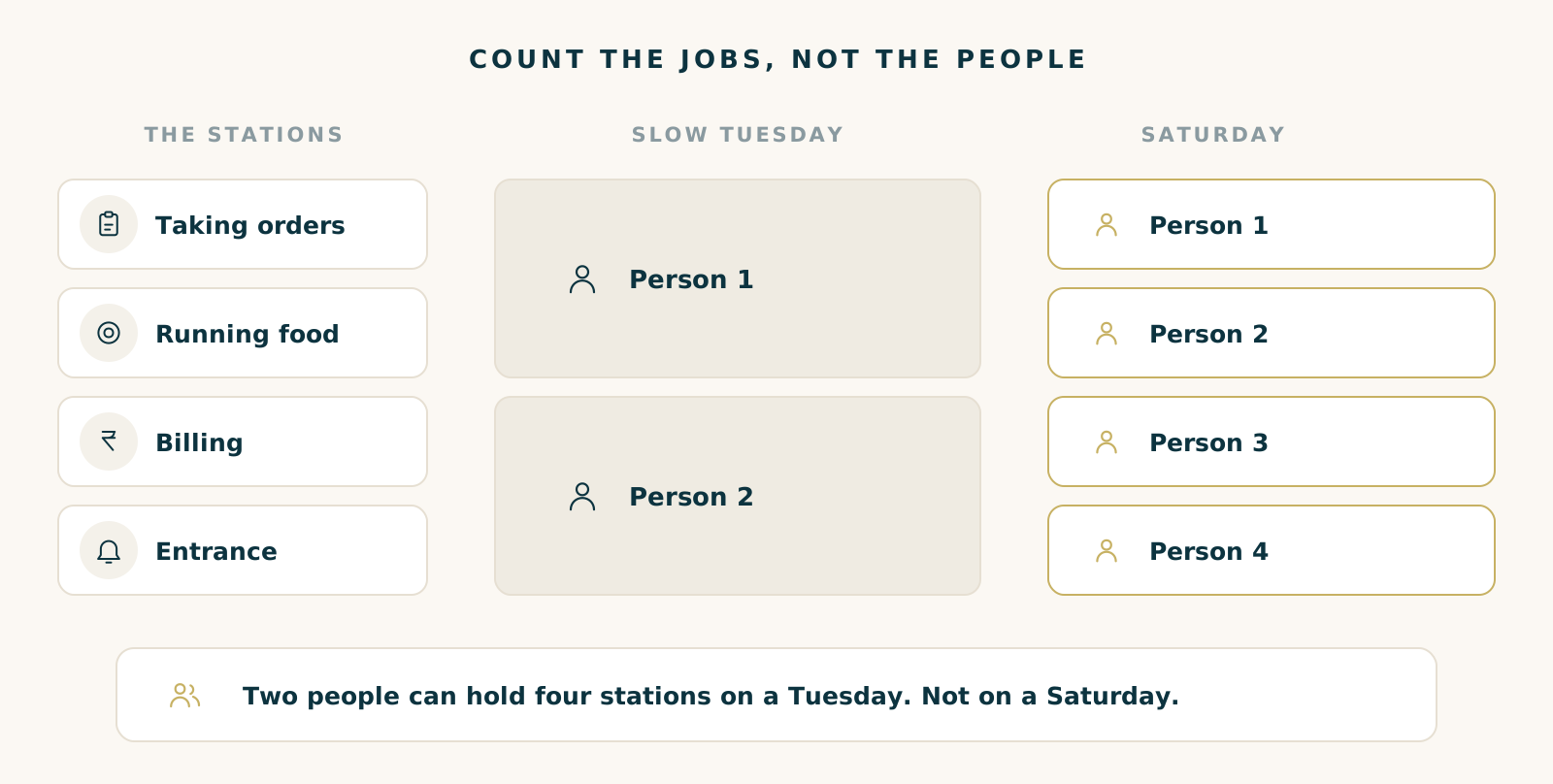
Write your floor plan down as stations, not headcount, then roster against it.
How do you hire restaurant staff who stay?
Most hiring in Indian restaurants happens in a panic. Someone quits on Friday, a replacement starts Monday, and nobody asked them anything useful in between. That panic is what a 60% attrition figure is actually made of.
Three things change the odds, and none of them take longer than the panic does.
Hire for the station, not the title. You are not hiring "a waiter". You are hiring someone to hold the billing counter on Saturdays, or to run food through the 1pm rush. Say which, in the interview. People who know what they are walking into stay longer than people who find out in week two.
Run a paid working trial. Two hours on a live shift tells you more than three conversations, and tells them whether they want the job. Pay for it — word travels fast in a small town.
Say the unattractive parts out loud. Split shifts, Sunday working, how late closing actually runs. Almost everyone who leaves in week three left because something was a surprise, and nothing you hide survives the first month anyway.
Then one question at the end: what made you leave the last place? The answer usually tells you what will make them leave yours.
What should restaurant staff training cover?
Most restaurant staff training fails because it happens once, verbally, on a busy day. Replace the speech with a checklist spread over the first month.
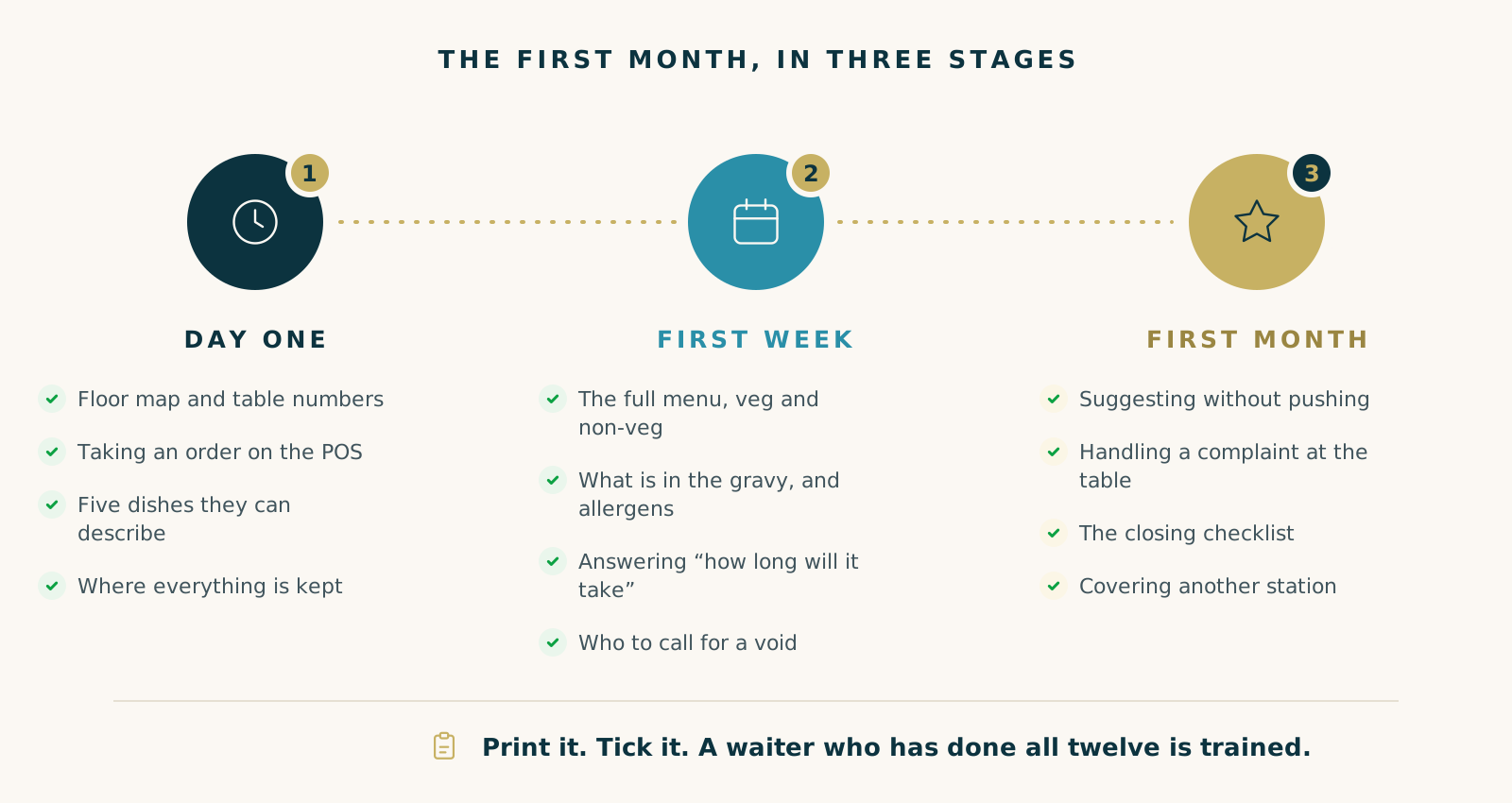
Print this. Tick it. A waiter who has done all twelve is trained.
Day one is about orientation, not performance
Floor map and table numbers. How to take an order on the POS. Five dishes they can describe without reading. Where everything is kept. A new waiter who can do these four things is useful on their first shift.
The first week is about the menu
The full card including what is veg and what is not, what goes into the gravies, and which items contain common allergens. Two answers matter more than the rest: what to say when a guest asks how long something will take, and who to call when a bill needs a void or a discount.
The first month is about judgment
Suggesting a second item without pushing. Handling a complaint at the table before it becomes a review. The closing checklist. Covering a station that is not theirs when someone calls in sick.
Two things make this stick. One person owns the training — usually your manager, never "whoever is free". And the checklist is physical, on the wall, with the trainee's name on it. Ticks motivate in a way a lecture does not.
restaurant staff training
The software should be the fastest part to teach. If a new waiter needs more than half an hour to learn how to send an order to the kitchen, the problem is the tool, not the person. Good POS software for restaurants is learnable in one shift.
ONE SCREEN, EVERY ROLE
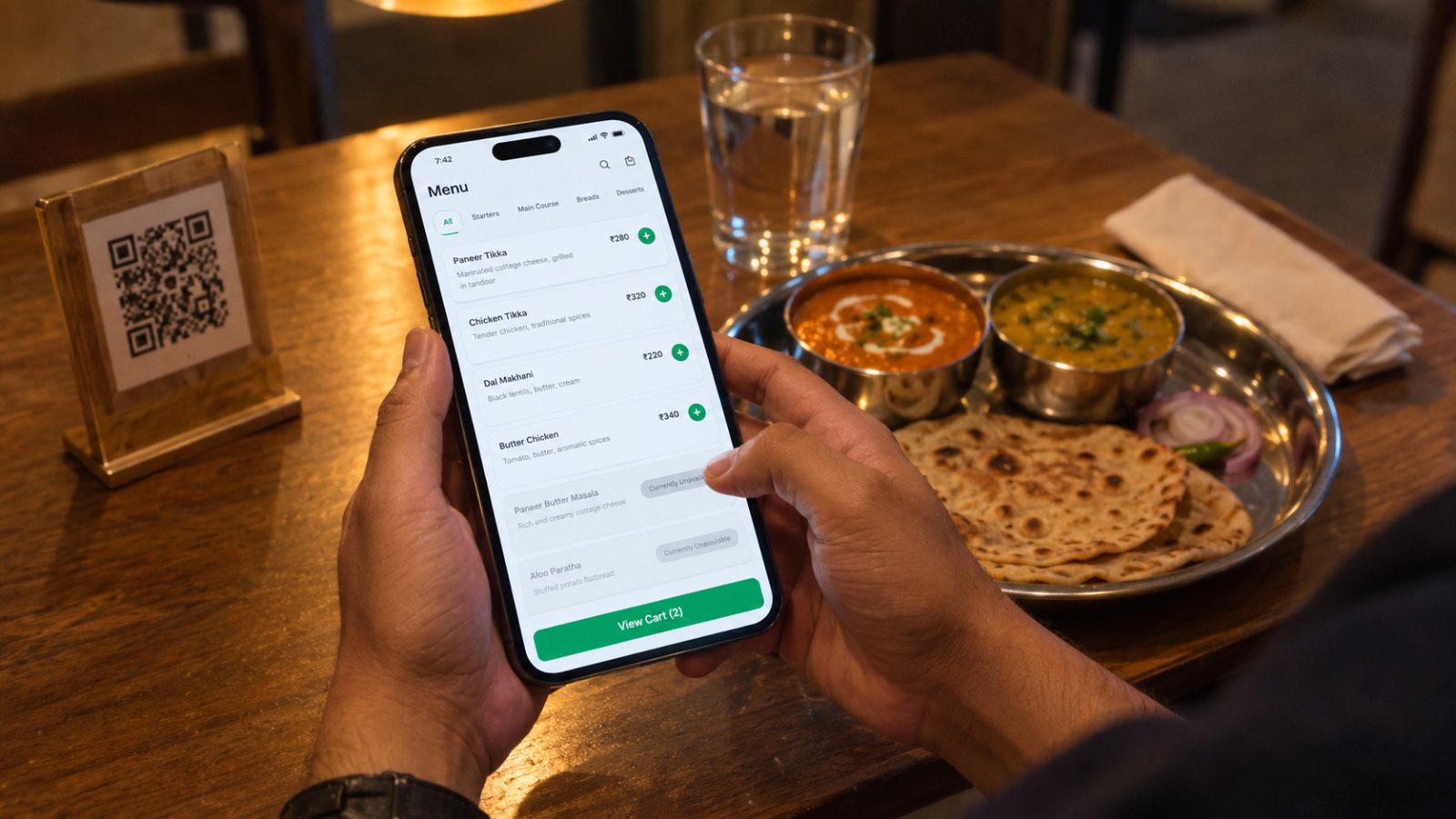
See what a waiter sees, and what a manager sees. Same system, different permissions — so there is less to explain and mistakes are hard to make.
How do you track restaurant staff attendance and salary?
If attendance lives in a register by the door, three things follow: it gets filled in from memory, it is impossible to audit, and the salary conversation on the 1st becomes an argument.
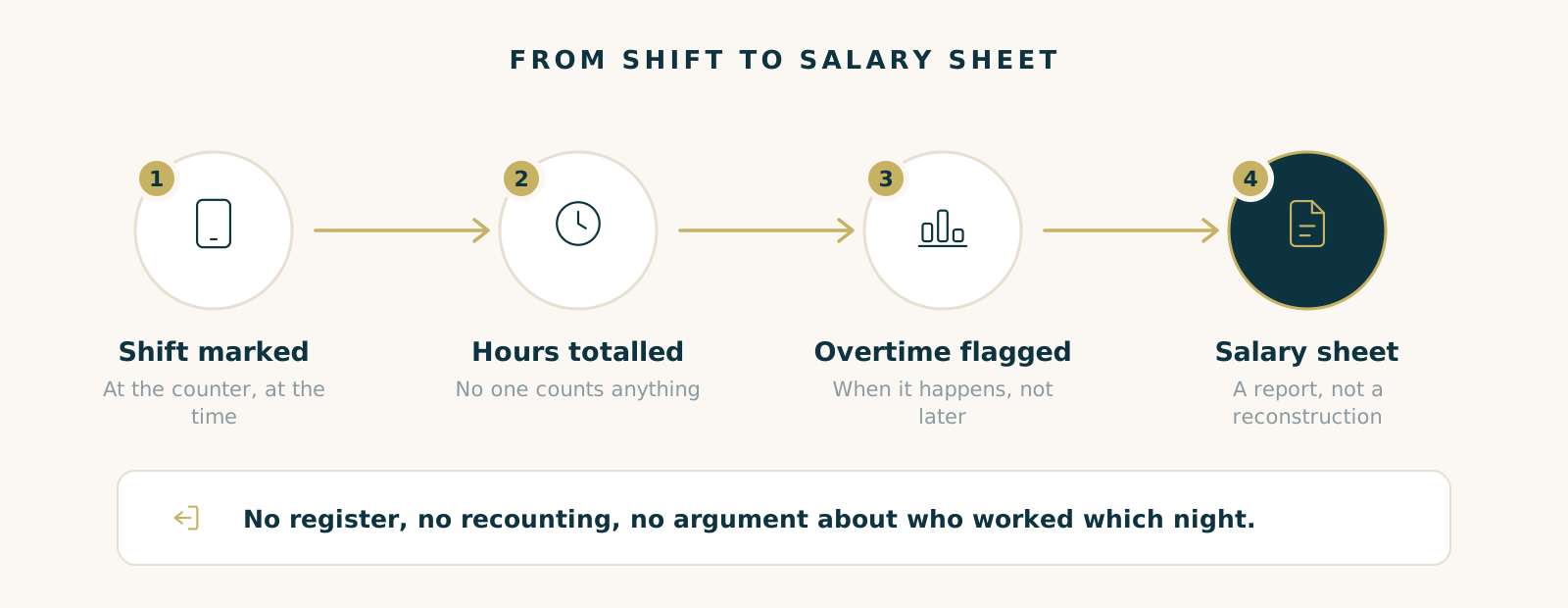
Mark the shift where the work happens — on the same device the staff already touch to take orders. Hours total themselves. Overtime is flagged when it happens rather than claimed later. The salary sheet at month end is a report, not a reconstruction.
This matters more in India than the brochures admit, because a lot of restaurant pay is still partly cash and often part-month. Someone who joined on the 14th, worked two doubles and took three days off for a family function is a hard calculation to do from a notebook — and getting it wrong twice is how you lose someone good.
What to insist on: attendance recorded at the time, shifts visible to staff so they can check their own hours, and an export your accountant can use without retyping it.
restaurant staff attendance
Who should be allowed to void a bill or give a discount?
This is the single most useful thing on this page, and most restaurants have never written it down.
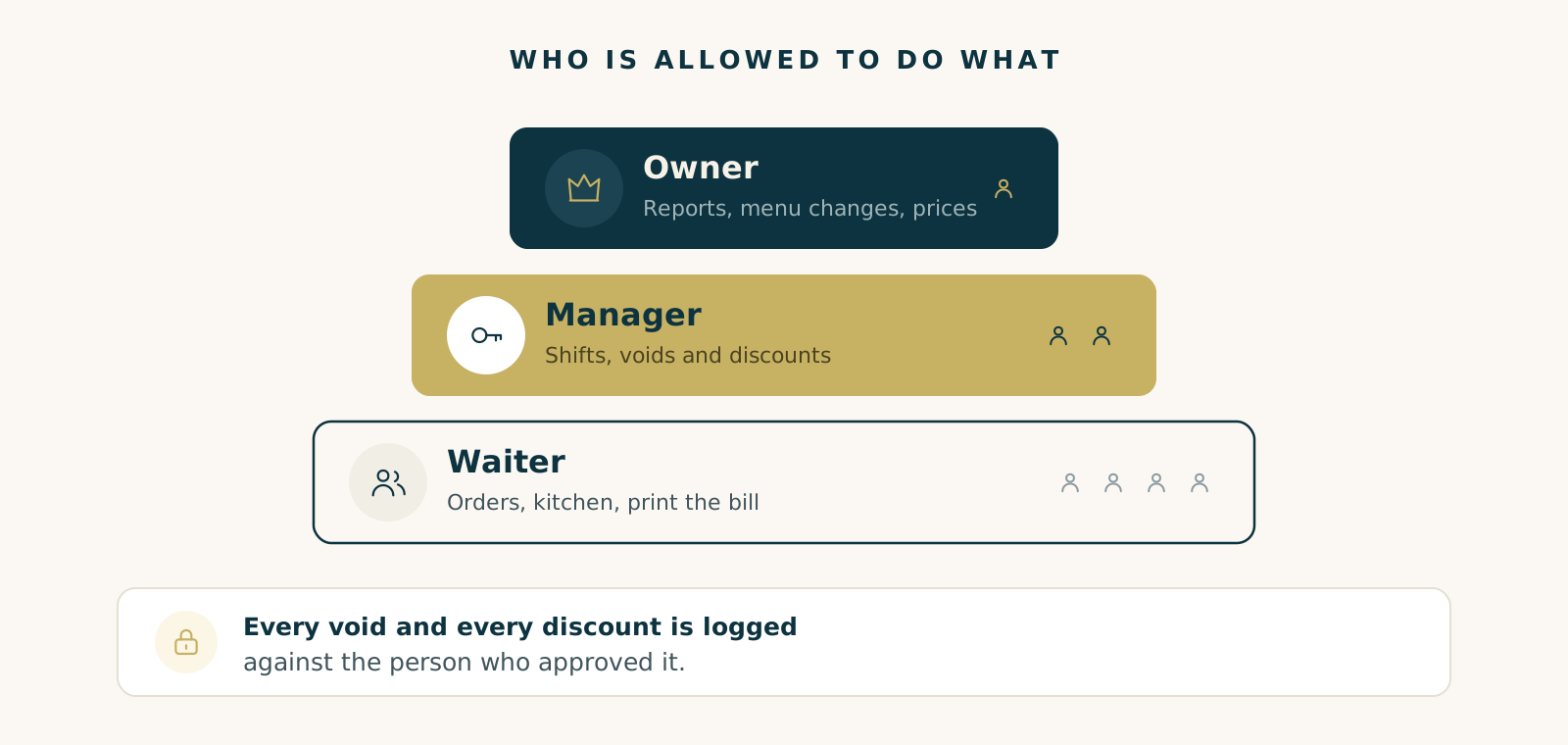
A waiter should be able to take an order, send it to the kitchen and print a bill — their whole job, no permission needed. Voids and discounts sit one level up, with a manager, and every one should be logged against the person who approved it. Reports, menu changes and prices belong to the owner alone.
Three roles is usually enough — a captain is a seniority title, not a fourth permission level.
Not because your staff are dishonest — because unlogged discretion is unfair to everyone. The honest waiter who knocks ₹50 off for an unhappy guest gets treated the same as the one who does it for a friend. A log makes the honest case defensible.
Three rules worth adopting tonight
- No edits after payment. Once a bill is settled it is closed.
- Reasons are compulsory. "Wrong item sent" and "guest complaint" tell you different things.
- Read the void log weekly, not when you suspect something. The pattern shows up long before the loss does.
Getting this right is also a restaurant billing question — a bill that can be silently edited is not really a bill.
FIFTEEN MINUTES, YOUR FLOOR
Bring one question to the demo: who can give a discount here? We will set up your actual roles on a live screen and show you what the log looks like afterwards.
Why do restaurant staff keep leaving?
Rarely for the reason they give. Pay is the polite answer.
BetterPlace put frontline attrition in Indian quick-service restaurants at 19% a month — close to one in five walking every month. Casual dining is slower, but not by as much as owners assume. The real reasons are usually these:
| What they say | What it usually means |
|---|---|
| Getting a better offer | Nobody here told me I was doing well |
| Family reasons | The rota changes on Saturday morning |
| Too much pressure | I was never trained for the station I am covering |
| Want to try something else | There is no next step above waiter here |
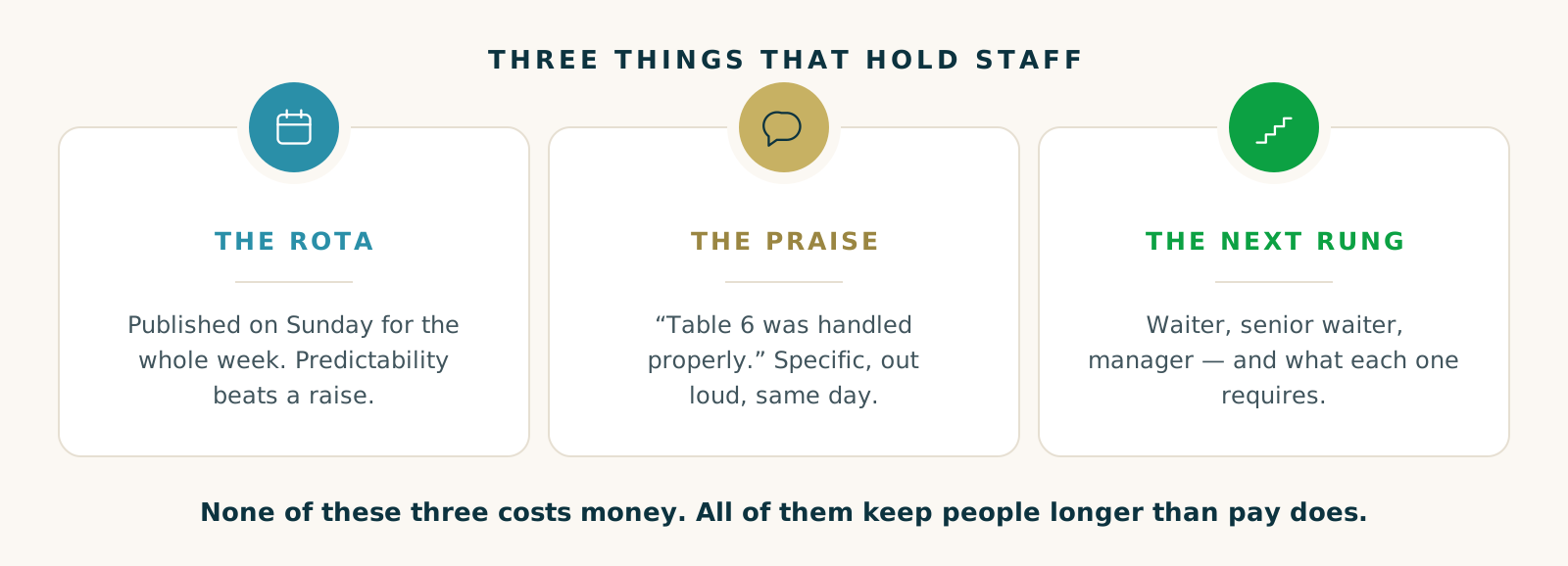
Three things hold staff, and none cost much. Publish the rota on Sunday for the whole week — unpredictability is the most common quiet reason people leave hospitality. Say specifically what went well; "table 6 was handled properly" lands harder than a generic thank-you. And name the next rung: waiter to senior waiter to manager, with what each requires.
The kitchen deserves the same thought. A cook working from clear tickets on a kitchen display system rather than a pile of smudged slips has a calmer service, and calm kitchens keep their people.
SIMPLE, HONEST PRICING
Staff and shift management on the Growth plan. No per-user charge — add every waiter on the floor without the bill changing.
How do you manage your restaurant staff using CurryIQ?
CurryIQ has staff management inside the POS rather than bolted alongside it, which matters because that is where your staff already are. Four things do the work.
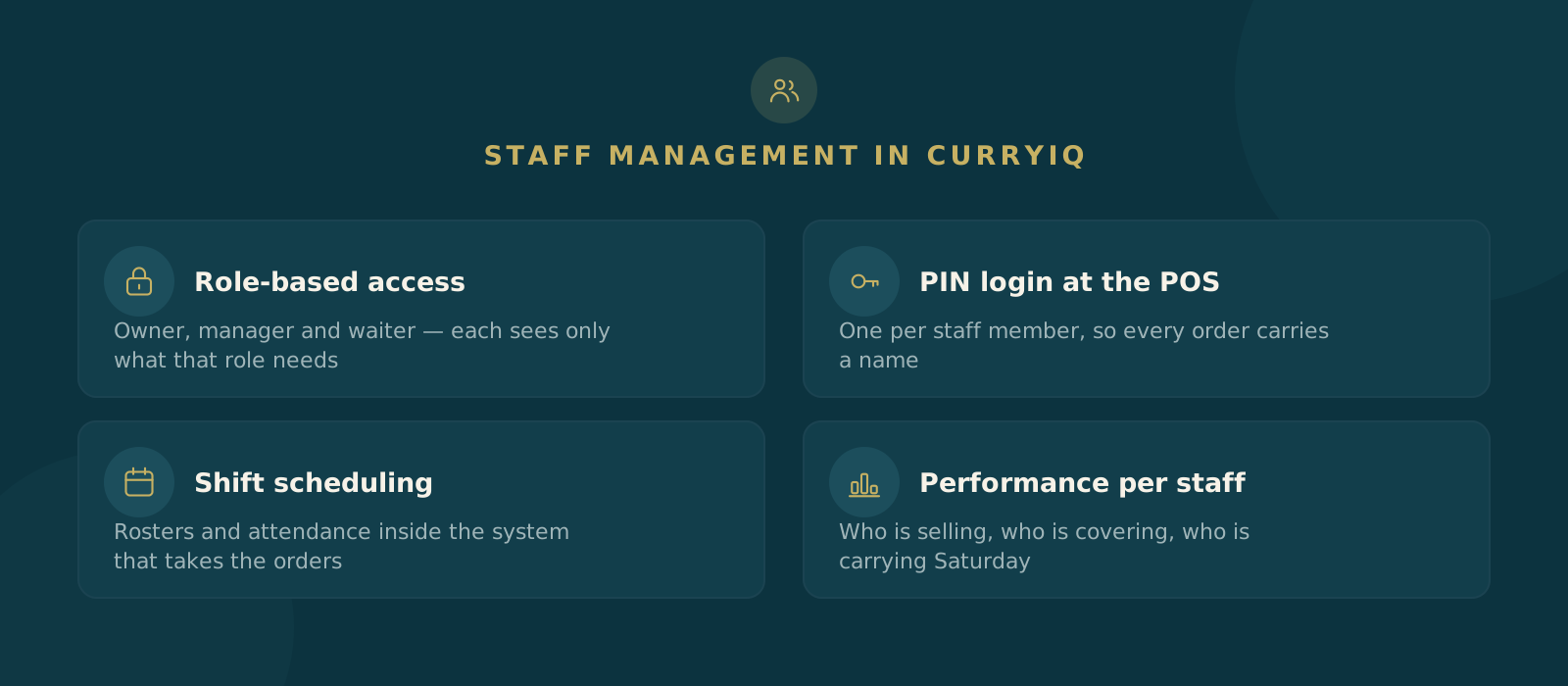
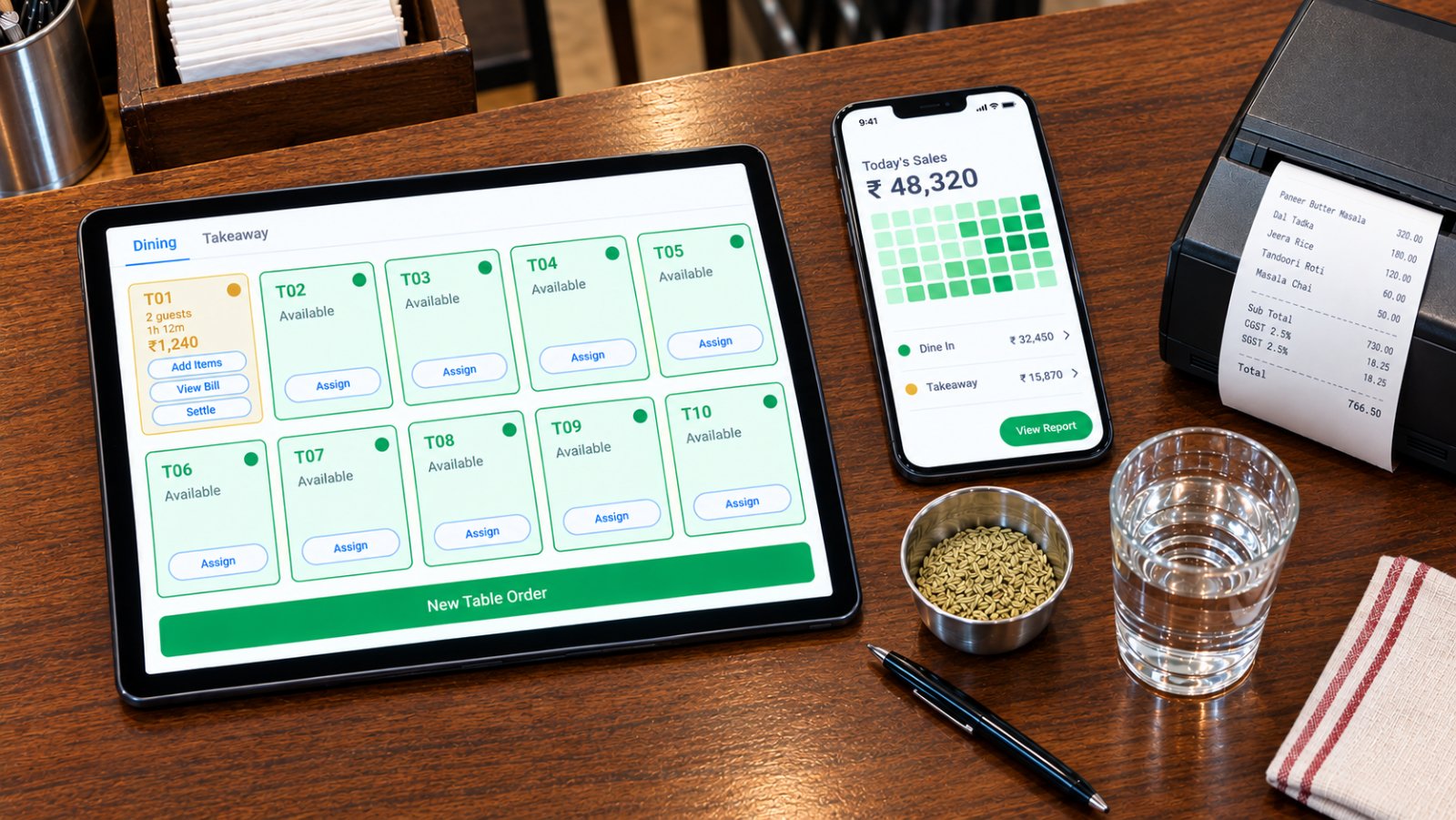
Role-based access — owner, manager, waiter. Each role sees only what that role needs. A waiter signs in to tables, the menu and the order screen: nothing they can accidentally break, and nothing to explain about features they will never touch.
A PIN login at the POS for every staff member, not one shared counter login. Every order and every bill carries the name of the person who did it — which is what turns the rules in this post from policy into something you can actually check.
Shift scheduling and attendance in the same system that takes the orders, so hours total themselves and the month-end salary sheet is a report rather than a reconstruction.
Performance tracking per staff. Who is selling, who is covering the most tables, who is quietly carrying Saturday — the same restaurant analytics that show you what sells also show you who sells it. Useful at appraisal time, more useful for the promotion you had not thought to offer.
Staff and shift management is on the Growth plan, and everything runs in a browser on hardware you already own — so a new waiter starts on the device already sitting there.
Frequently asked questions
How do you manage restaurant staff as a first-time owner?
Start with two documents, not five. A station list — the jobs covered every shift — and a twelve-point training checklist. Roster against stations rather than headcount, and decide who may approve a void before the first time you need to.
How many waiters do I need for a 30-seat restaurant?
Usually two on a normal service and three at peak, based on the common one-waiter-per-four-to-five-tables guideline. Check it against your own floor: a long menu or a high average bill means each table takes more attention, so you will need the third person earlier.
What is the best way to track restaurant staff attendance?
Record it at the time, on the device staff already use, rather than in a register filled in from memory later. The value is not the record itself — it is that hours, overtime and the salary sheet all come out of it without anyone recalculating anything.
How do I hire good restaurant staff?
Hire for a named station rather than a job title, run a short paid working trial, and say the unattractive parts out loud before they accept. Then ask what made them leave the last place — the answer usually predicts what will make them leave yours.
How do I handle conflict between restaurant staff?
Separate them, hear each one alone, and decide the same day. Floor conflicts are almost never about the thing being argued over — they are about sections, tips or who keeps getting the easy shift, which are rota problems wearing a personality costume. Fix the rota and most of it stops coming back.
When should I discipline a staff member, and how?
Same day, in private, about the specific thing rather than a general complaint about attitude. Write down what was said, even two lines in a notebook, because a verbal warning nobody recorded did not happen. And keep the pattern in view: a first instance is a mistake, a third is a decision.
How do I stop staff from giving unauthorised discounts?
Require manager approval with a PIN, make a reason compulsory, block edits after payment, and read the log weekly. The combination matters more than any single rule — approval without a log still leaves you guessing, and a log nobody reads is just storage.
Do I need separate software to manage restaurant staff?
Not usually. A separate HR tool for one restaurant tends to go unused within a month. Staff management works best inside the system that already takes the orders, because that is where the staff already are.
BUILT IN INDIA, FOR INDIAN RESTAURANTS
Run a Saturday without standing at the pass. Roles, shifts, order-taking, KOT routing and GST-correct billing on one browser-based system. Free onboarding, no bundled hardware, cancel anytime.
Keep reading
Ready to try CurryIQ?
Start free. No credit card required. Setup in 10 minutes.