Cloud Kitchen Setup Cost in India 2026: ₹1.8 Lakh to ₹22 Lakh, Broken Down
A cloud kitchen setup cost in India runs anywhere from ₹1.8 lakh to ₹22 lakh. That's a huge gap, and it comes down to one thing: are you renting a kitchen that already has an exhaust hood, or building one from an empty room?
Most cost guides skip that question. They hand you a single number, mix your rent in with your equipment, call it a "total," and leave out the biggest cost of running a delivery-only kitchen altogether — the 18 to 25 per cent that Zomato and Swiggy take off every order.
So here's the version with the missing parts put back. Three ways to open, every line in rupees, one-time costs kept separate from monthly ones, the cash you actually need in the bank before day one, and how many orders a day it takes before you start making money. The maths is shown wherever it matters, so you can drop your own numbers in.
How much does a cloud kitchen setup cost in India?
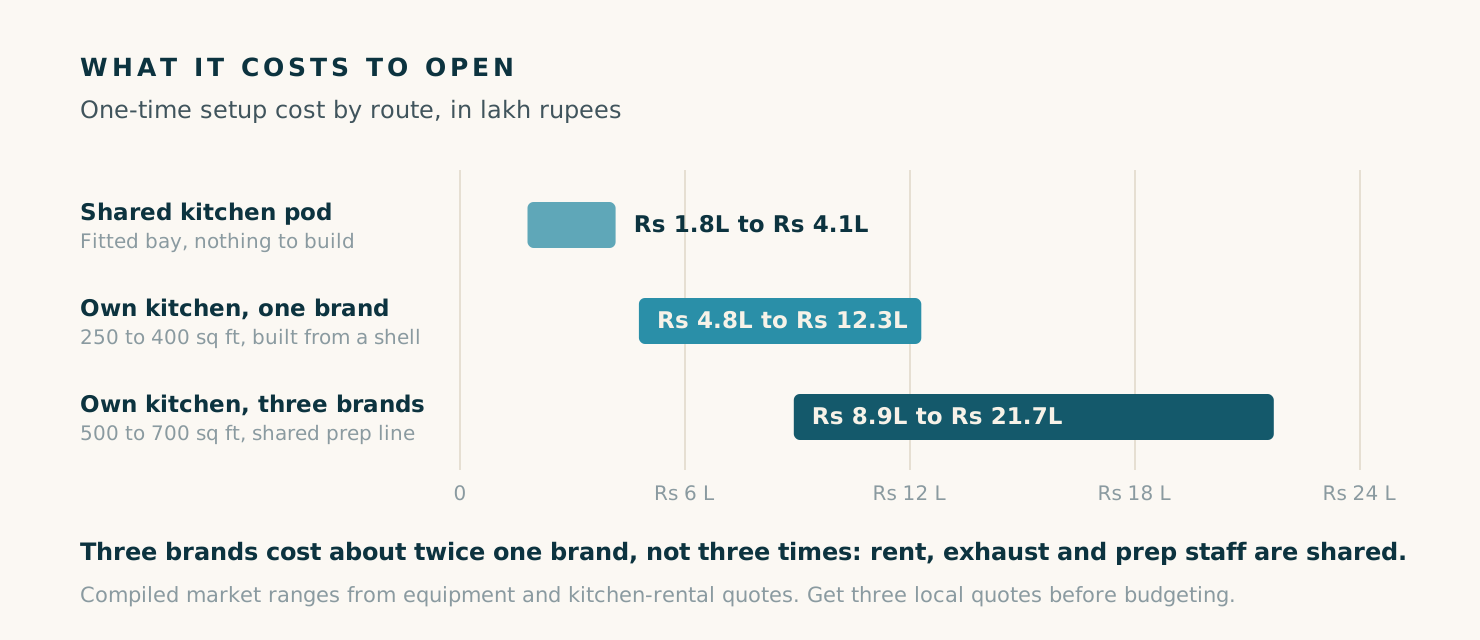
- Shared kitchen pod: ₹1.8 lakh to ₹4 lakh. You rent a fitted cooking bay. Nothing to build.
- Your own small kitchen, one brand: ₹4.8 lakh to ₹12 lakh. 250 to 400 sq ft, built out from a bare shell.
- Your own kitchen, three brands: ₹9 lakh to ₹22 lakh. 500 to 700 sq ft, more stations, three sets of packaging.
- Monthly running cost, one brand: ₹73,000 to ₹1.9 lakh in fixed costs, before food, packaging and commission.
- Cash you need before opening: 1.3 to 1.8 times the setup cost. Setup, plus two months of running costs, plus a month of working capital.
- Break-even: around 26 orders a day on aggregator orders at a ₹350 average bill. Or 14 a day if guests order from you directly.
Two things about these numbers. They're compiled market ranges from equipment and kitchen-rental quotes, not survey data — so get three local quotes before you lock a budget. And the demand side is real: India's food services market was ₹5,69,487 crore in FY24, heading to ₹7,76,511 crore by FY28, with the organised segment growing 13.2 per cent a year, according to the NRAI India Food Services Report 2024. Kitchens don't usually close because nobody's hungry. They close on costs.
START FREE — NO CARD NEEDED
Run your kitchen on software built for Indian restaurants, with GST billing and QR ordering from day one.
The three cost buckets nobody separates
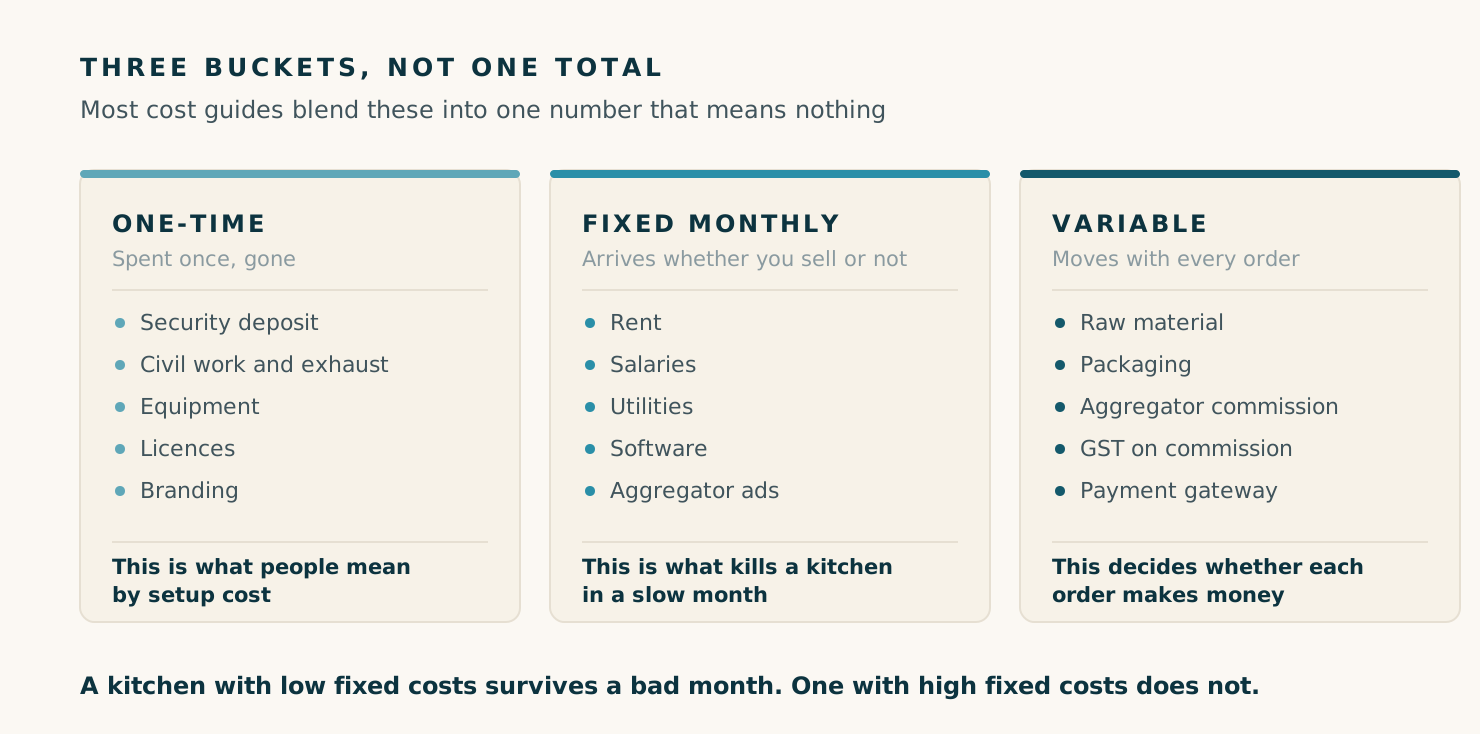
Before any numbers, this is the bit that makes the rest of the page useful. Your costs come in three types, and most guides mash them into one figure that tells you nothing.
One-time costs are spent once and gone. Deposit, civil work, equipment, licences, branding. This is what people mean when they say "setup cost."
Fixed monthly costs show up whether you sell anything or not. Rent, salaries, utilities, software, internet. These are what finish off a kitchen in a slow month.
Variable costs move with every single order. Raw material, packaging, aggregator commission, payment gateway charges.
Why it matters: a ₹6 lakh setup carrying ₹1.6 lakh of fixed monthly costs is a completely different business from a ₹6 lakh setup carrying ₹80,000. One of them survives a bad July. Keep the three apart and you'll see straight away which one you're building.
The three routes to opening a cloud kitchen
Route 1 — a shared kitchen pod: ₹1.8 lakh to ₹4 lakh
You rent a fitted bay inside a shared commissary. The exhaust, chimney, water line, drainage and power load are already there. You bring the equipment your own menu needs, your utensils, and your stock.
| Line item | Cost |
|---|---|
| Security deposit | ₹50,000 to ₹1,00,000 |
| Your own equipment and small wares | ₹40,000 to ₹1,20,000 |
| Licences and registrations | ₹12,000 to ₹35,000 |
| POS hardware | ₹15,000 to ₹30,000 |
| Branding and listing photography | ₹20,000 to ₹50,000 |
| Opening stock and first packaging lot | ₹40,000 to ₹80,000 |
| Total one-time | ₹1.77 lakh to ₹4.15 lakh |
If you've never run a kitchen, start here. It costs a quarter of building your own, you can walk away after three months if the menu doesn't sell, and you find out whether people actually order your food before you've spent ₹3 lakh on a chimney. The catch is higher rent per square foot, and you're sharing equipment during the dinner rush.
Route 2 — your own small kitchen, one brand: ₹4.8 lakh to ₹12 lakh
A 250 to 400 sq ft commercial space, built out from scratch. This is what most people picture.
| Line item | Cost |
|---|---|
| Security deposit, 3 months rent | ₹60,000 to ₹1,80,000 |
| Civil work, electricals, plumbing, exhaust | ₹80,000 to ₹2,50,000 |
| Cooking equipment | ₹1,50,000 to ₹3,50,000 |
| Refrigeration and cold storage | ₹60,000 to ₹1,50,000 |
| Small wares and utensils | ₹25,000 to ₹55,000 |
| Licences and registrations | ₹12,000 to ₹35,000 |
| POS hardware | ₹15,000 to ₹40,000 |
| Branding, packaging design, food photography | ₹25,000 to ₹70,000 |
| Opening stock and first packaging lot | ₹50,000 to ₹1,00,000 |
| Total one-time | ₹4.77 lakh to ₹12.3 lakh |
That spread is almost entirely about the condition of the space. A shell that already has three-phase power, a water line and a drain will cost you ₹80,000 in civil work. A raw shop front will cost ₹2.5 lakh for the same result. See ten spaces before you sign one. The right shell saves you more than you'll ever claw back haggling over a tandoor.
Route 3 — your own kitchen, three brands: ₹9 lakh to ₹22 lakh
One kitchen, 500 to 700 sq ft, cooking for three virtual brands off a shared prep line. This is how operators squeeze more revenue out of the same rent.
| Line item | Cost |
|---|---|
| Security deposit, 3 months rent | ₹1,20,000 to ₹3,00,000 |
| Civil work and services, more stations | ₹1,50,000 to ₹4,00,000 |
| Cooking equipment | ₹2,50,000 to ₹6,00,000 |
| Refrigeration and cold storage | ₹1,00,000 to ₹2,50,000 |
| Small wares and utensils | ₹40,000 to ₹90,000 |
| Licences and registrations | ₹20,000 to ₹50,000 |
| POS hardware and a kitchen display screen | ₹35,000 to ₹80,000 |
| Branding and photography, three brands | ₹75,000 to ₹2,00,000 |
| Opening stock and packaging, three menus | ₹1,00,000 to ₹2,00,000 |
| Total one-time | ₹8.9 lakh to ₹21.7 lakh |
Three brands don't cost three times one brand. They cost about twice. The rent, the exhaust, the fridges and the prep staff are all shared. What actually triples is branding, packaging and the mess of running three menus at once. Don't start here. Start at Route 1 or 2, prove one menu sells, then bolt brands onto a kitchen that already works.
Cloud kitchen setup cost, line by line
Kitchen space and security deposit
Deposits run two to six months of rent. Landlords ask for more on a food space than a shop, because of the drainage and the smell. At a Tier 2 rent of ₹25,000, budget ₹75,000 for the deposit, not ₹25,000.
Look for a space that's already been a kitchen. Second-generation food space comes with the exhaust, the drain and the power load sorted. That's ₹1.5 lakh you don't spend.
Civil work, electricals and exhaust
₹80,000 to ₹4 lakh, and it's the line people get most wrong. It covers the exhaust hood and ducting, the chimney and blower, a three-phase connection and load upgrade, wall tiling to a washable height, waterproofing and floor slope, a grease trap, and plumbing for a two-sink wash area.
Your FSSAI inspection looks at several of these. Skipping the floor slope or the grease trap to save ₹40,000 is how a licence gets stuck for a month — and you can't onboard to Zomato without it.
Cooking equipment
₹1.5 lakh to ₹6 lakh, depending entirely on the menu. North Indian needs a tandoor, a two or four-burner range, a bulk cooker and a griddle. Add a deep fryer for fast food, a dosa plate for South Indian, a deck oven for pizza.
One warning. A lot of the cost guides you'll find were written by equipment suppliers, and their equipment numbers run high for obvious reasons. Our rule: buy second-hand for anything that only heats — ranges, burners, work tables, racks. Buy new for anything with a motor or a compressor.
Refrigeration and cold storage
₹60,000 to ₹2.5 lakh. A deep freezer, an under-counter chiller near the prep line, and a vertical display if your menu needs one. Buy new. A second-hand compressor giving up in May will cost you more in spoiled stock than you saved on the purchase.
Licences and registrations
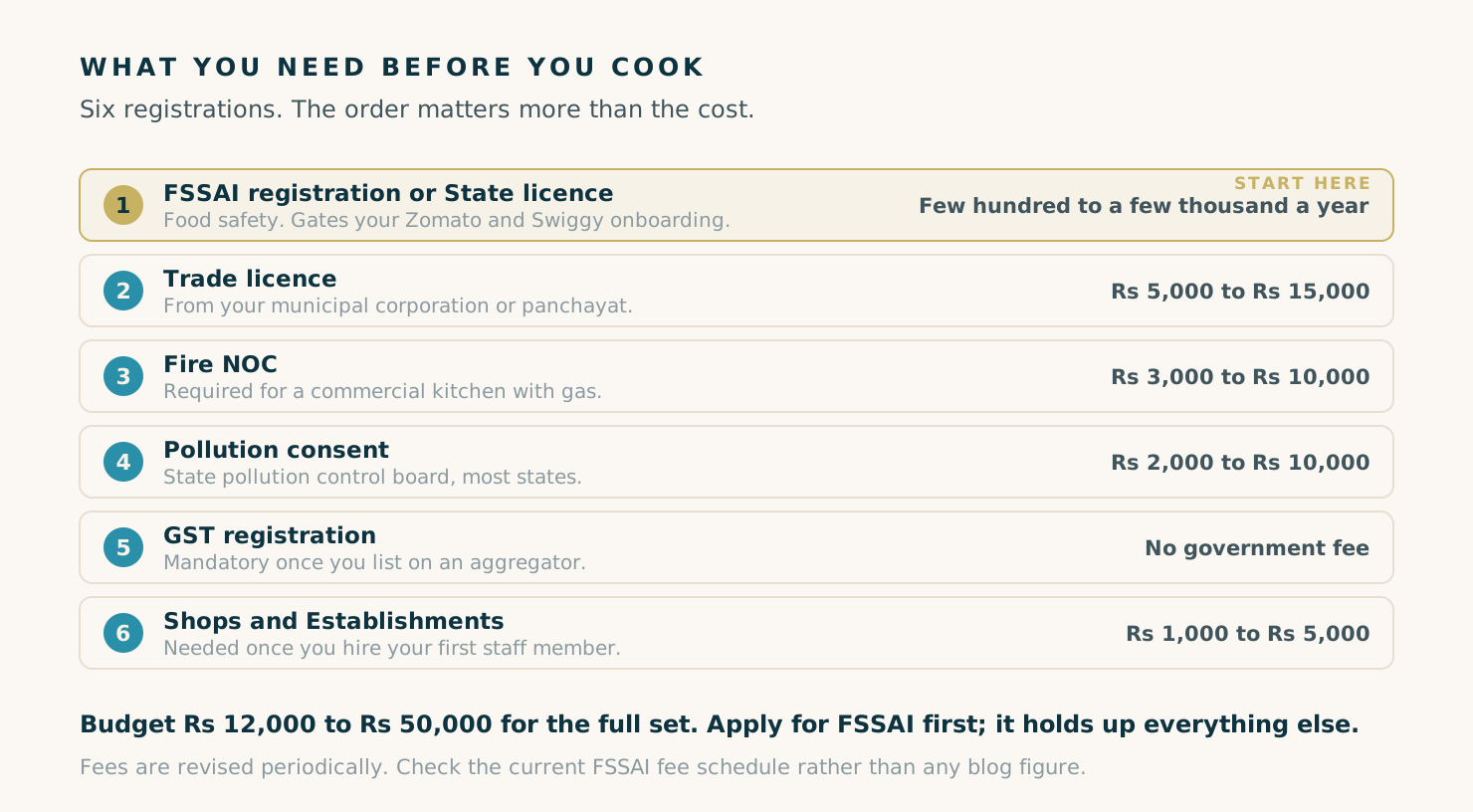
₹12,000 to ₹50,000 for the lot, and the order matters more than the money. You'll need an FSSAI registration or State licence depending on turnover, a trade licence from your municipal body, a fire NOC, a pollution consent in most states, GST registration, and a Shops and Establishments registration once you hire.
Start the FSSAI application first. It holds up everything else, including your Zomato and Swiggy onboarding. Fees get revised, so check the current FSSAI schedule rather than trusting any blog's numbers. Including ours.
POS and technology
₹15,000 to ₹80,000 one-time for hardware, plus a monthly software fee.
One-time: a tablet or laptop, a thermal bill printer, a KOT printer or a kitchen screen, and a UPS so a power cut doesn't eat an order mid-service.
The monthly fee is where you should pay attention. Supplier guides quote restaurant software at ₹2,000 to ₹5,000 a month, which is what old on-premise systems cost. Browser-based software is a fraction of that — CurryIQ starts at ₹499 a month for a single kitchen, with no licence fee and no server to look after.
Budget separately for aggregator middleware. Connecting Zomato and Swiggy runs through a service like UrbanPiper at roughly ₹2,000 to ₹5,000 a month, and that's not part of your POS subscription. Worth knowing before you compare quotes.
Still choosing? Our guide to POS software for restaurants covers what to test before you sign anything.
SEE WHAT YOU GET
Three plans, no setup fee, nothing locked in. Check which one fits a single-kitchen operation.
Branding, packaging and food photography
₹20,000 to ₹2 lakh, depending on how many brands you're running. Logo and identity, printed packaging at its minimum order quantity, and food photography for your listings.
Spend the money on the photography. On Zomato and Swiggy, your listing photo is the entire storefront. There's no building, no signboard, no smell of food drifting out. A ₹15,000 shoot of twelve dishes will earn more every month than a ₹15,000 logo ever will.
Opening stock
₹40,000 to ₹2 lakh. Raw material for the first fortnight, plus your first packaging order at its minimum quantity. The MOQ is the surprise here — printed boxes often start at 1,000 units per size, so a four-SKU menu ties up ₹25,000 before you've sold a thing.
What a cloud kitchen costs to run every month
One brand, own kitchen, Tier 2 city. Fixed costs first, because these land whether you sell or not.
| Fixed monthly cost | Amount |
|---|---|
| Rent | ₹20,000 to ₹60,000 |
| Staff, one cook plus one helper plus one packer | ₹35,000 to ₹70,000 |
| Utilities, gas, electricity, water | ₹12,000 to ₹30,000 |
| POS software | ₹499 to ₹1,499 |
| Aggregator middleware | ₹2,000 to ₹5,000 |
| Internet and phone | ₹1,000 to ₹2,500 |
| Aggregator ads and promotions | ₹5,000 to ₹25,000 |
| Total fixed | ₹75,500 to ₹1,94,000 |
Then the variable costs, which are percentages rather than fixed amounts:
| Variable cost | Share of each order |
|---|---|
| Raw material | 28 to 35 per cent |
| Packaging | 6 to 9 per cent |
| Aggregator commission | 18 to 25 per cent |
| GST on the commission | 18 per cent of the commission |
| Payment gateway | about 2 per cent |
That fourth line is the one almost nobody prints. The aggregator takes a commission, and then charges you 18 per cent GST on that commission. On a ₹350 order at 22 per cent, that's ₹77 of commission plus ₹13.86 of GST on top. So ₹90.86 leaves, not ₹77. Over a thousand orders a month, the line you didn't know about costs you ₹13,860.
Staffing is the line you have the most control over, and the one most likely to creep up on you. Our guide to managing restaurant staff works through how many people a small kitchen actually needs.
ORDERS WITHOUT COMMISSION
Every direct order skips the aggregator cut entirely. See how guests order straight from their phone.
How much cash do you actually need before you open?
This is the number that quietly sinks cloud kitchens, and no cost guide bothers to state it. Your setup cost is not your cash requirement. You need the setup cost plus two months of fixed costs plus a month of working capital, because no kitchen hits its order volume in month one. Nobody's ever done it.
| Route | Setup cost | Two months fixed | Working capital | Cash needed |
|---|---|---|---|---|
| Shared pod | ₹1.8 lakh | ₹1.1 lakh | ₹40,000 | ₹3.3 lakh |
| Own kitchen, one brand | ₹4.8 lakh | ₹1.5 lakh | ₹60,000 | ₹6.9 lakh |
| Own kitchen, three brands | ₹9 lakh | ₹2.8 lakh | ₹1.2 lakh | ₹13 lakh |
Plan for 1.3 to 1.8 times your setup cost in total cash. A kitchen that spends its last rupee on a chimney and then can't buy vegetables in week three hasn't opened a business. It's bought equipment.
Cloud kitchen setup cost by city tier
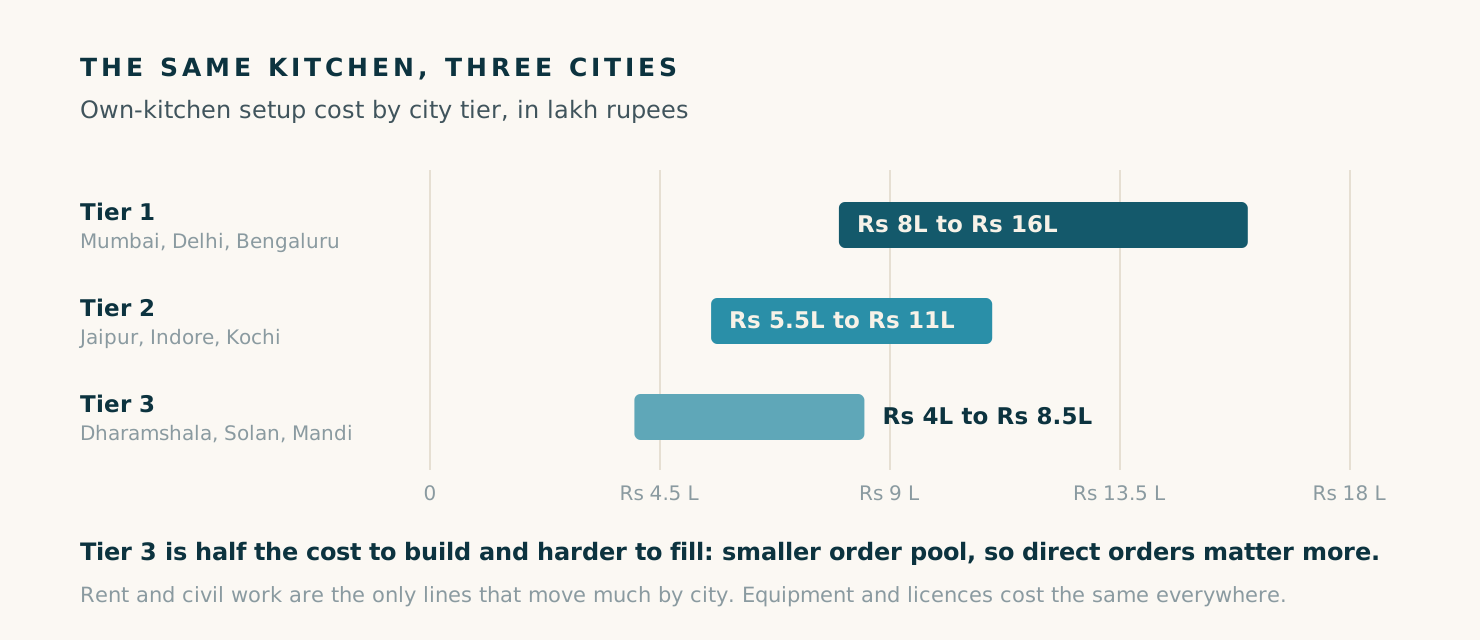
Rent and civil work are really the only lines that shift much between cities. Equipment, licences and packaging cost roughly the same whether you're in Bandra or Dharamshala.
| City tier | Monthly rent, 300 sq ft | Civil work | Own-kitchen setup |
|---|---|---|---|
| Tier 1, Mumbai, Delhi, Bengaluru | ₹45,000 to ₹90,000 | ₹1.5 lakh to ₹4 lakh | ₹8 lakh to ₹16 lakh |
| Tier 2, Jaipur, Indore, Kochi | ₹20,000 to ₹45,000 | ₹1 lakh to ₹2.5 lakh | ₹5.5 lakh to ₹11 lakh |
| Tier 3, Dharamshala, Solan, Mandi | ₹10,000 to ₹25,000 | ₹70,000 to ₹1.8 lakh | ₹4 lakh to ₹8.5 lakh |
Tier 3 is cheaper to open and harder to fill. Half the build cost, yes. But the aggregator order volume in a small town is a fraction of a metro's, so the orders you need have to come out of a much smaller pool. Cheaper doesn't mean easier. It means repeat customers and direct orders carry far more weight than they would in Bengaluru.
How many orders a day do you need to break even?
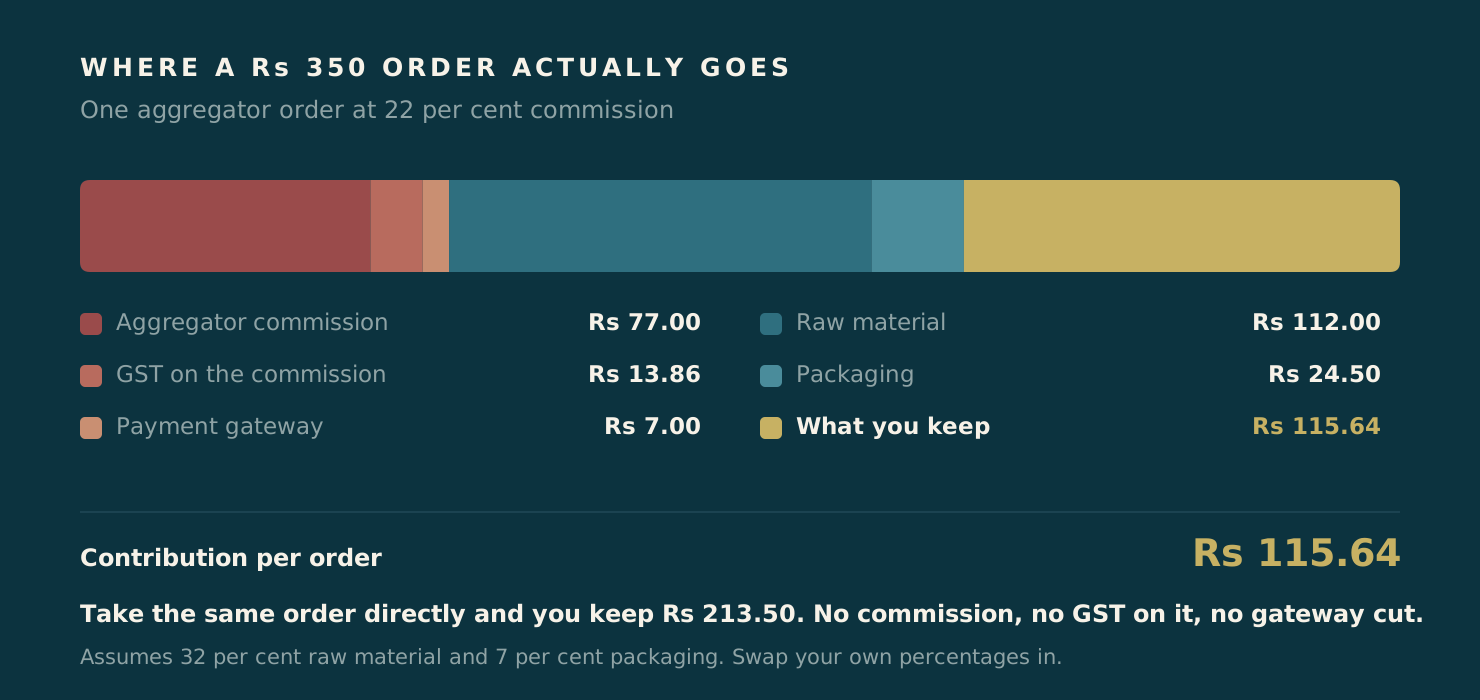
Here's what actually happens to one ₹350 order coming through an aggregator at 22 per cent commission:
| Step | Amount |
|---|---|
| Order value | ₹350.00 |
| Less commission at 22 per cent | ₹77.00 |
| Less GST on the commission at 18 per cent | ₹13.86 |
| Less payment gateway at 2 per cent | ₹7.00 |
| You receive | ₹252.14 |
| Less raw material at 32 per cent of ₹350 | ₹112.00 |
| Less packaging at 7 per cent of ₹350 | ₹24.50 |
| Contribution per order | ₹115.64 |
Now divide your fixed monthly cost by that number.
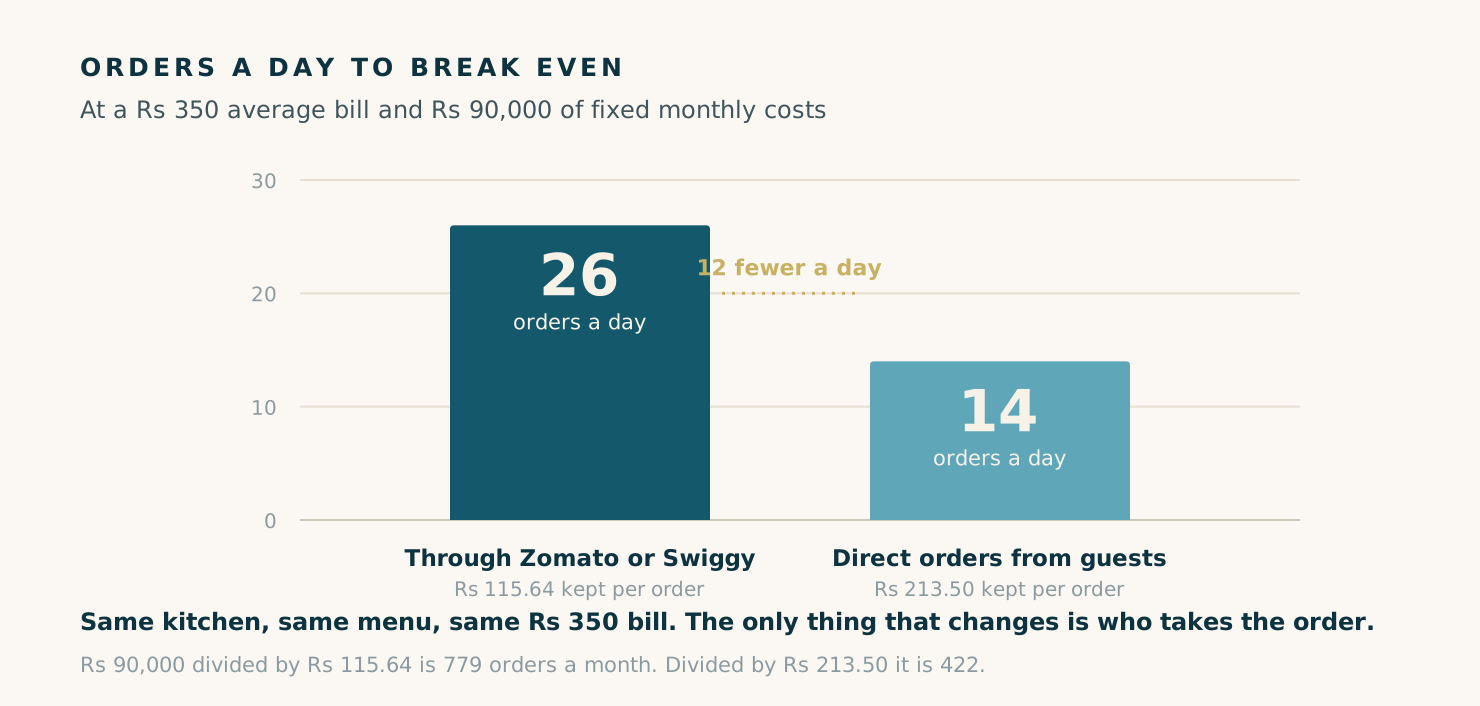
At ₹90,000 of fixed costs: ₹90,000 ÷ ₹115.64 = 779 orders a month. That's about 26 orders a day, every day, just to cover the rent and the salaries. Profit starts at order number 780.
Now run the same ₹350 order as a direct order instead. No commission. No GST on the commission. No gateway charge if the guest pays by UPI. Contribution becomes ₹350 − ₹112 − ₹24.50 = ₹213.50. Divide ₹90,000 by that and you need 422 orders a month. Fourteen a day.
Same kitchen. Same menu. Same ₹350 bill. Twenty-six orders a day through an aggregator, or fourteen if the guest orders from you directly.
That one difference is worth more than anything you can negotiate off your equipment list. It's also the reason a direct ordering channel isn't a nice-to-have you'll get around to in year two. If you want more ways to move the numbers on both sides of that equation, our guide to increasing restaurant sales runs through nine of them.
FIFTEEN MINUTES, YOUR NUMBERS
Bring your menu and your rent. We'll walk through what your break-even actually looks like.
How to open a cloud kitchen for less
Six things that cut the setup cost without cutting the business:
Start in a shared pod. Biggest single saving on this page — ₹3 lakh or more — and it turns a permanent bet into a three-month test.
Take a second-generation space. A shell that was a kitchen before comes with the exhaust, the drain and the power load. Worth ₹1.5 lakh on day one.
Launch with twelve dishes, not forty. A short menu needs less equipment, fewer fridges, fewer packaging SKUs and less stock sitting around. It sells better too — listings with forty items just get scrolled past.
Buy second-hand for heat, new for motors. Ranges, burners, tables, racks second-hand. Compressors, blowers, mixers new.
Ask for rent-free fit-out time. Most landlords will give you one to two months rent-free while you build. They just don't offer. That's ₹20,000 to ₹90,000 for asking a question.
Keep your software monthly and in the browser. On-premise systems want ₹30,000 up front plus hardware you then have to maintain. A monthly subscription you can cancel keeps that money in your stock budget, and browser-based means nothing sits in a kitchen that's already short of space.
What CurryIQ does in a cloud kitchen
A cloud kitchen isn't a restaurant with the tables removed. There's no counter, no waiter reading the room, no owner spotting a problem from across the floor. Orders arrive on a screen and food goes out in a bag. That's it. Which means your software isn't an admin tool sitting in the corner — it's the only thing standing between you and the order.
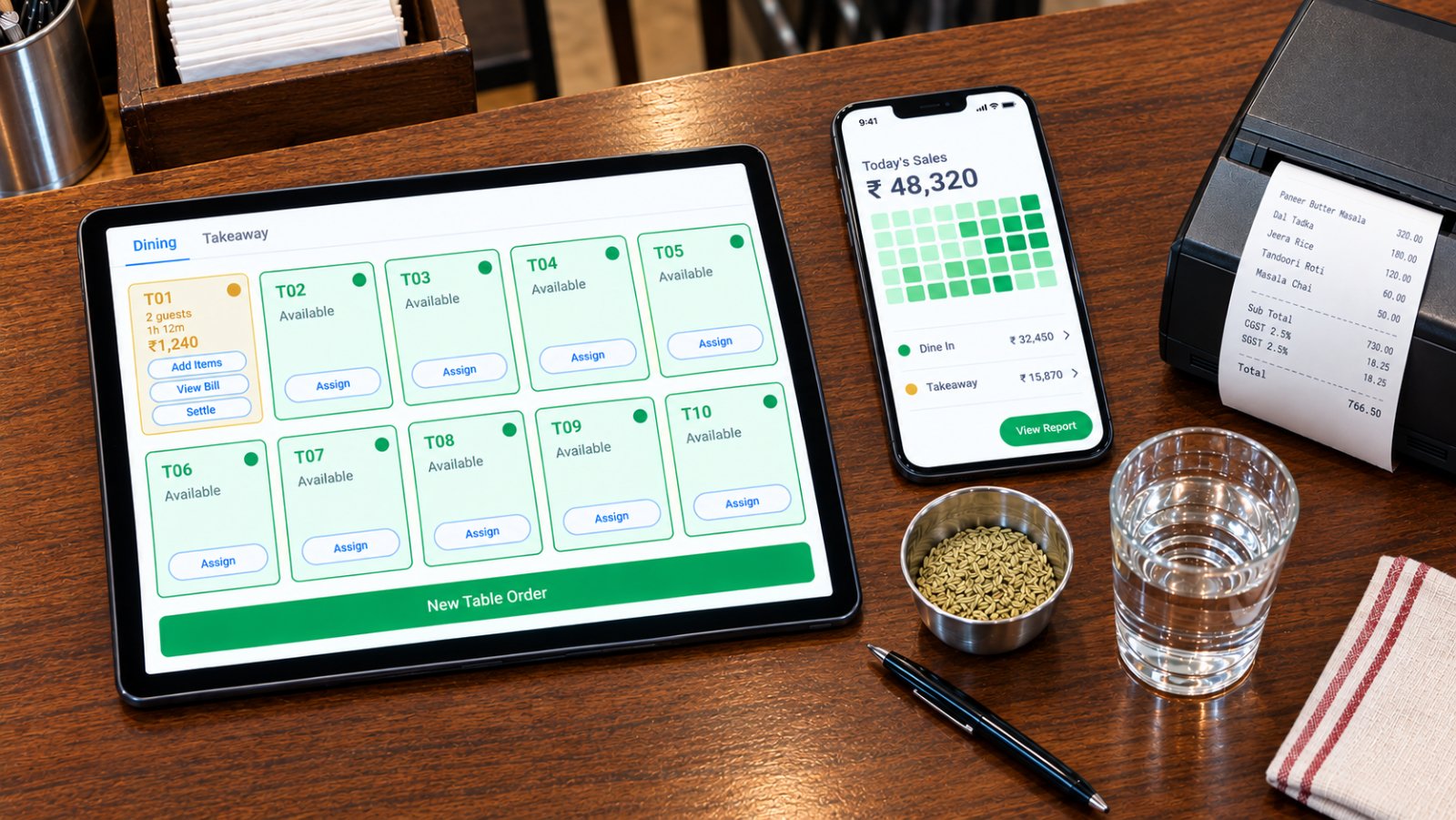
CurryIQ is browser-based restaurant software built in India, and in a delivery-only kitchen it does four jobs. Each one lands on a line of the cost sheet above.
It replaces your billing software line — at a fraction of the quote. GST-compliant invoices, KOT management and every payment mode, from ₹499 a month for a single kitchen. Compare that to the ₹2,000 to ₹5,000 a month the supplier guides quote and you've saved ₹18,000 to ₹54,000 in year one, before you've sold anything. There's no licence fee, no installation, and no machine to maintain in a room where every square foot is already spoken for. Our guide to billing software for restaurants goes deeper on the GST side.
It attacks your commission line — the biggest cost you have. QR ordering puts your menu on the guest's phone with no app to download. A customer who ordered from you last week can order again without Zomato in the middle, which means no 22 per cent, no GST on top of it, and no gateway charge. Go back to the break-even maths: that's the difference between needing 26 orders a day and needing 14. In a Tier 2 or Tier 3 town, where the aggregator order pool is small to begin with, this is usually the whole business case.
It watches your raw material line, which you can't watch yourself. Recipe-level inventory deducts ingredients as orders get billed, so you find out about a shortfall before service instead of halfway through it. Your food cost percentage becomes a number you can look at today, not something you work out at the end of the month when it's too late to do anything about it. In a kitchen where nobody is standing at a pass counting plates, this is how you catch waste.
It gives you a screen your cooks can actually read. A kitchen display system replaces printed tickets, colour-codes orders by how long they've been sitting, and keeps working when the internet drops. That last part matters more in a hill town than it does in Bengaluru — and a dropped connection during Saturday dinner is a stack of lost orders, not an inconvenience.
Two honest notes. Zomato and Swiggy connect through UrbanPiper, which is a separate monthly cost, so factor it in when you compare. And everything runs in a browser, which means the only hardware you buy is the tablet and the printer that are already on your list.
Frequently asked questions
What is the minimum cost to start a cloud kitchen in India?
About ₹1.8 lakh, in a shared kitchen pod where the exhaust, chimney and drainage already exist. That covers your deposit, your own equipment, licences, POS hardware, branding and opening stock. Building your own kitchen from a bare shell starts closer to ₹4.8 lakh.
Is a cloud kitchen profitable in India?
It can be, but the margin is thinner than a dine-in restaurant because the aggregator takes 18 to 25 per cent, plus GST on that commission. At a ₹350 average bill and ₹90,000 of fixed monthly costs, you need roughly 26 aggregator orders a day to break even. Operators who build a direct ordering channel get there at about 14 a day, which is where the actual profit lives.
How much does an FSSAI licence cost for a cloud kitchen?
A basic FSSAI registration is a few hundred rupees a year for small turnover, and a State licence is a few thousand a year. Add a trade licence, fire NOC and pollution consent and you're looking at ₹12,000 to ₹50,000 for the full set. Fees change, so check the current FSSAI schedule before you budget.
Can I start a cloud kitchen from home?
In many states, yes — with an FSSAI registration and local municipal permission. It's the cheapest possible start. The limits are real though. No commercial exhaust, limited refrigeration, and there's only so much a domestic gas connection and one hob can push out during a dinner rush. Most home kitchens that work end up moving into a pod inside a year.
What is the GST rate for a cloud kitchen?
Restaurant service is taxed at 5 per cent without input tax credit, and that applies to a cloud kitchen exactly as it does to a dine-in restaurant. The bit people miss is separate: the aggregator charges you 18 per cent GST on its commission. That's a cost you pay, not a tax you collect.
How much does a cloud kitchen franchise cost?
Franchises generally start higher than going independent, because you're paying a brand fee and an ongoing royalty on top of the same kitchen build. What you get back is a menu, a supply chain and a name people already know. Weigh the franchise fee against what you'd spend building branding and photography yourself, and weigh the royalty across three years, not one.
Where to start
Pick the route before you pick the equipment. Never run a kitchen before? Take a shared pod for three months and find out whether your menu sells for ₹3.3 lakh instead of ₹6.9 lakh. Already run one? See ten spaces before signing, and let the condition of the shell decide, not the rent.
Then work backwards from 26 orders a day. Every rupee you keep out of the commission line pulls that number down, and nothing else on your cost sheet moves it nearly as far.
When you're ready to set up the software side, our cloud kitchen POS guide covers connecting Zomato and Swiggy, running more than one menu, and getting your GST treatment right from the first order. And if a digital menu is how you plan to take direct orders, start there instead.
BUILT IN INDIA, FOR INDIAN KITCHENS
GST billing, QR ordering, recipe-level inventory and a kitchen screen that works offline. Set up in an afternoon.
Keep reading
Ready to try CurryIQ?
Start free. No credit card required. Setup in 10 minutes.