How to Increase Restaurant Sales: 9 Steps That Work Without Advertising
Last updated: October 2026
Your Tuesday is quiet, your Saturday is full, and the monthly total has not moved in six months. So someone tells you to run ads.
The fastest way to increase restaurant sales is not to find new guests — it is to raise what the guests already walking in spend, and how often they come back. New guests are the most expensive thing you can buy. The other two levers cost nothing and you control both.
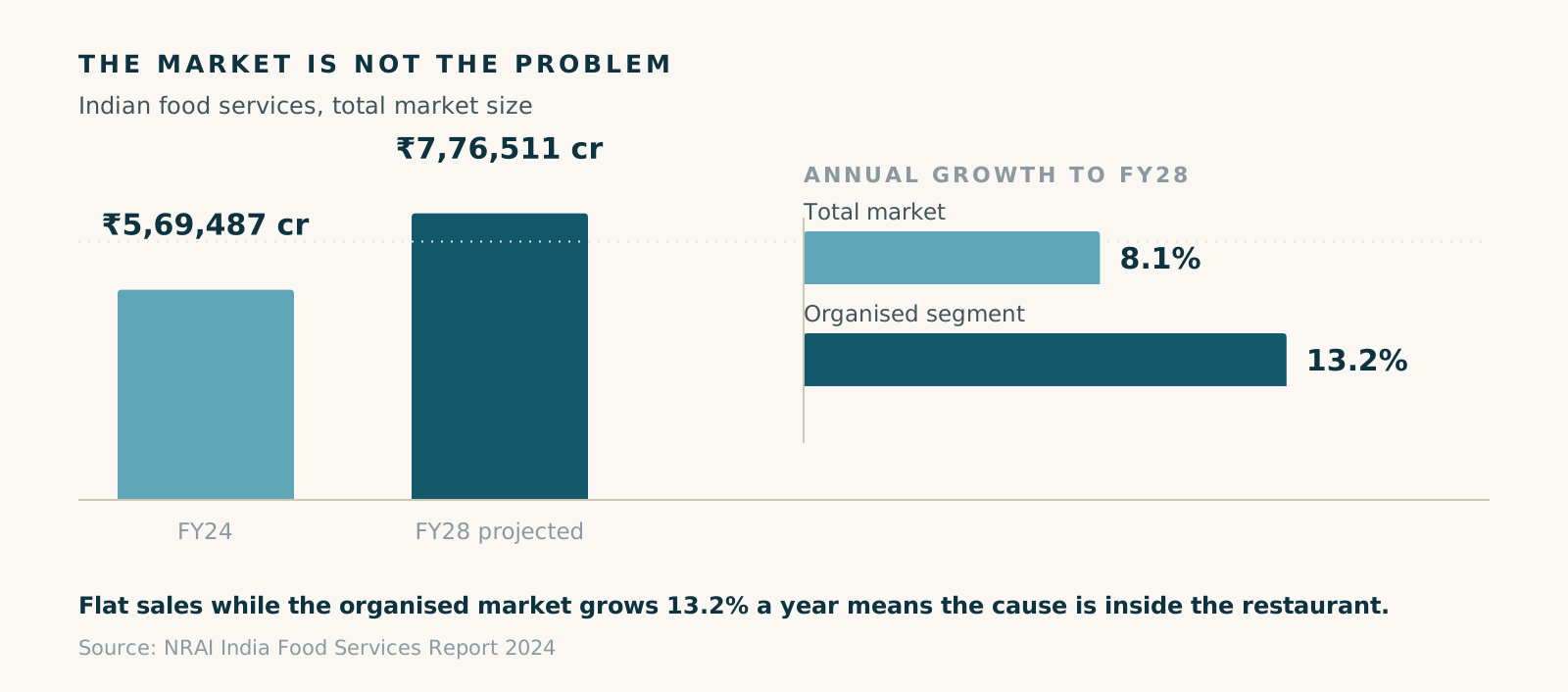
Here is the part most owners do not see. Indian food services is not a shrinking market. It was valued at ₹5,69,487 crore in FY24 and is growing at 8.1% a year, with the organised segment growing at 13.2%, on the NRAI's India Food Services Report 2024 numbers. If your sales are flat in a market growing that fast, the market is not the problem. Something inside the restaurant is.
This guide is nine steps, in the order worth doing them. Six of them cost nothing. None of them need an advertising budget.
The short answer
- Sales = guests × average bill × how often they return. Most owners only push the first one.
- Start with your item report, not your marketing. The answer is usually already in last month's numbers.
- Cut the waiting, not the eating. A table waits roughly 28 minutes of every 75 for you.
- Make the second round easy to order. Most missed revenue is a drink nobody asked for.
- Check what delivery actually pays before you chase more of it.
- CurryIQ shows you which dishes, which hours and which tables are making money — and lets guests order the second round themselves.
START FREE — NO CARD NEEDED
See which dishes are actually paying you. CurryIQ runs in your browser on hardware you already have — billing, QR ordering, kitchen tickets and the reports behind every step below.
Why restaurant sales go flat
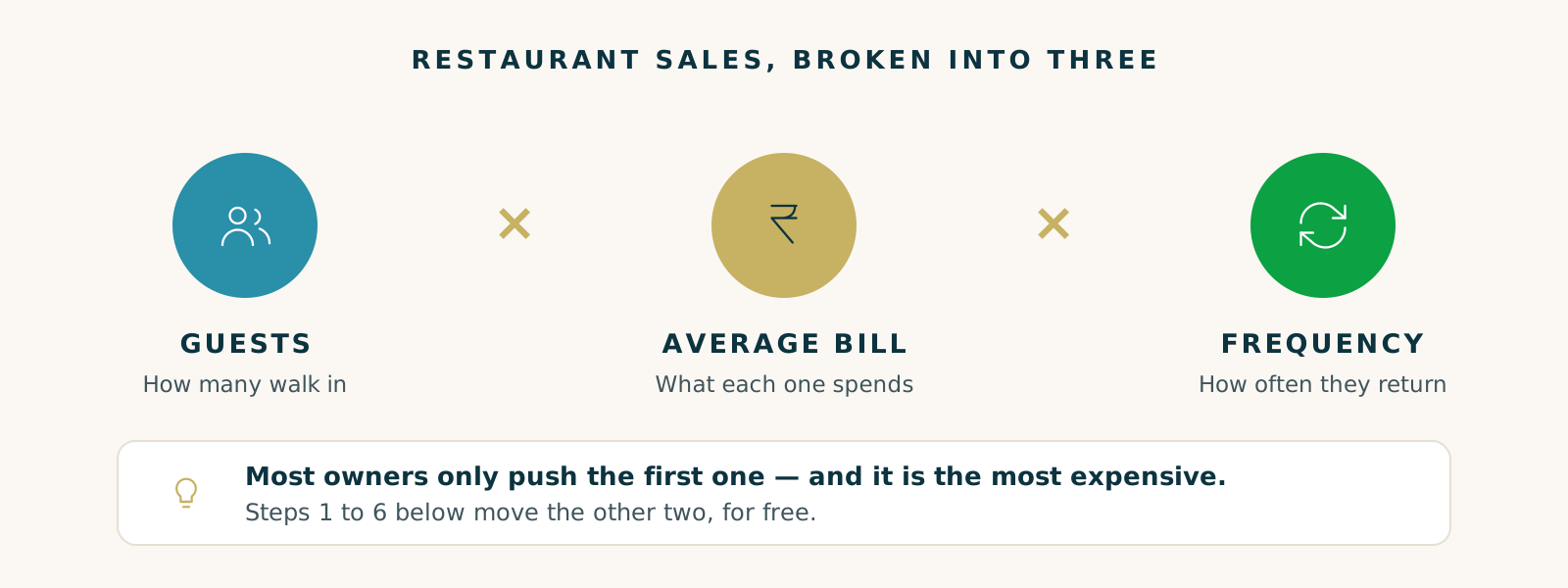
Sales in any restaurant come down to three numbers multiplied together: how many guests walk in, what each one spends, and how often they come back.
Almost every piece of advice you will read is about the first number. Run ads. Post more on Instagram. Join another aggregator. All of it works a little, all of it costs money, and all of it stops working the day you stop paying.
The second and third numbers are quieter and cheaper. A guest already sitting at table 7 who orders one more drink has raised your average bill with no acquisition cost at all. A guest who comes back monthly instead of quarterly has tripled their value without you spending a rupee.
The three multiply, which is the part worth sitting with. A ten per cent lift on each one separately is not a ten per cent gain — it is thirty-three.
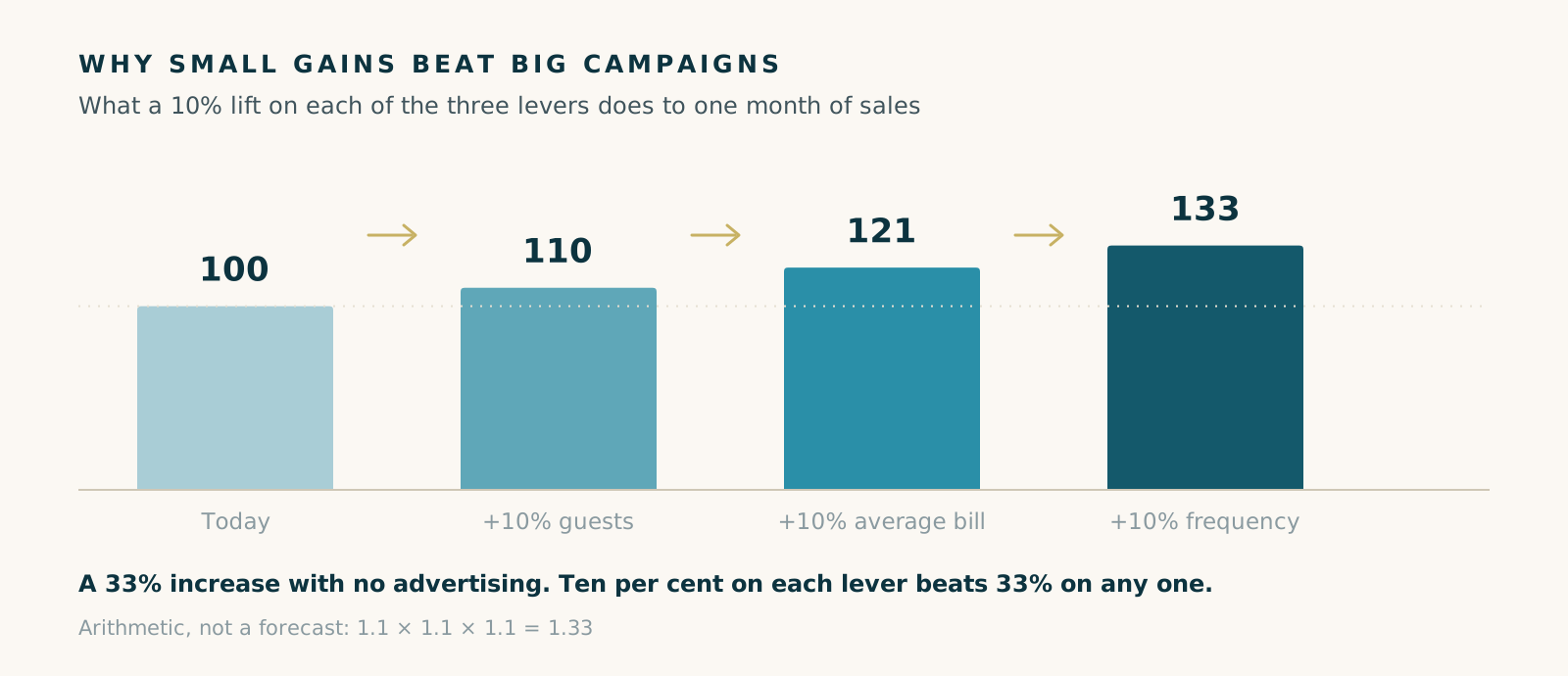
Flat sales usually mean one of those two numbers has been ignored for years. The nine steps below fix them in order of effort — the free ones first.
9 steps to increase restaurant sales
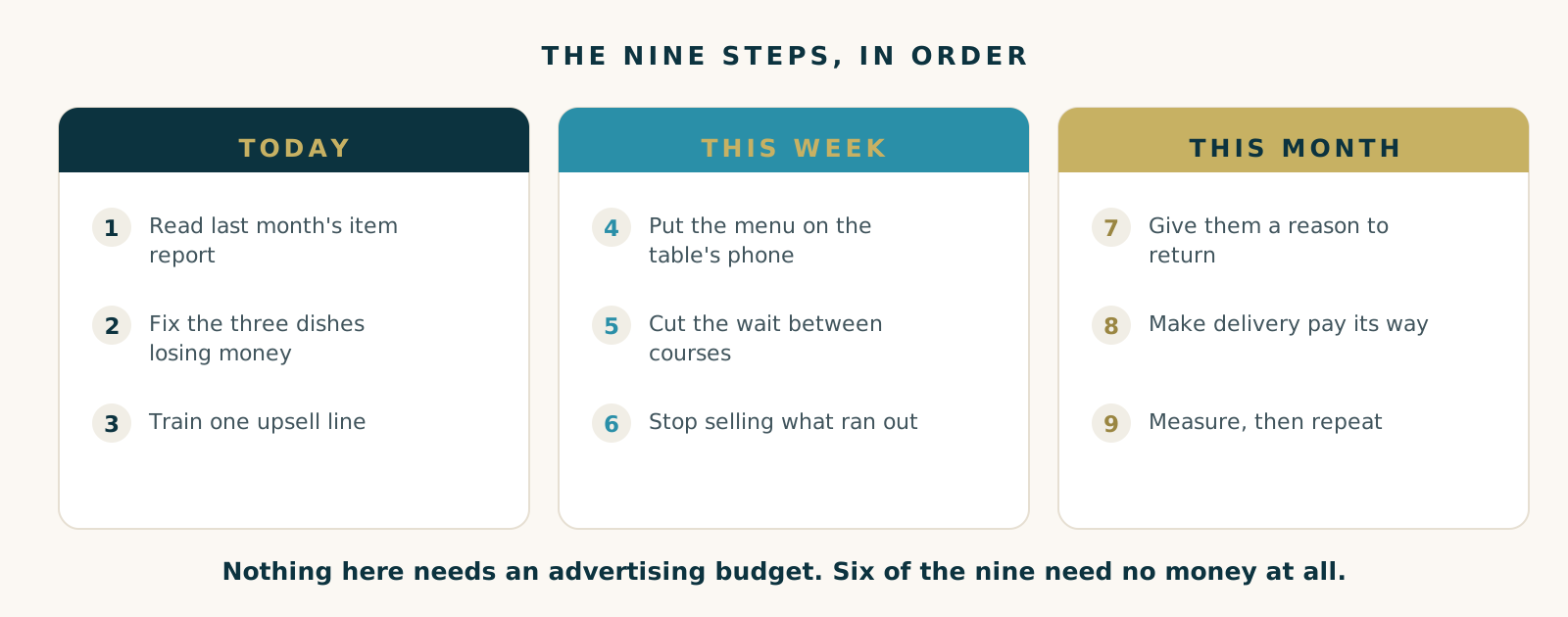
Work through these in order. Steps 1 to 3 you can do today with no software and no spend. Steps 4 to 6 take a week. Steps 7 to 9 are the ones that compound.
Step 1: Read last month's item report before you do anything else
Every answer in this guide is already sitting in your sales data.
Pull a report of every item sold last month with quantity and revenue. Not the daily total — the item-level list. Most owners have never looked at it, and the first read is always a surprise: the dish you are proudest of is twelfth, and something you nearly removed is in the top three.
Sort it two ways. Once by quantity sold, once by revenue. The gap between those two lists is where your decisions are.
Takeaway: You cannot increase restaurant sales by guessing which dishes matter. Thirty minutes with the item report replaces a month of guessing.
Step 2: Fix the three dishes quietly losing you money
Now put every dish into one of four boxes.
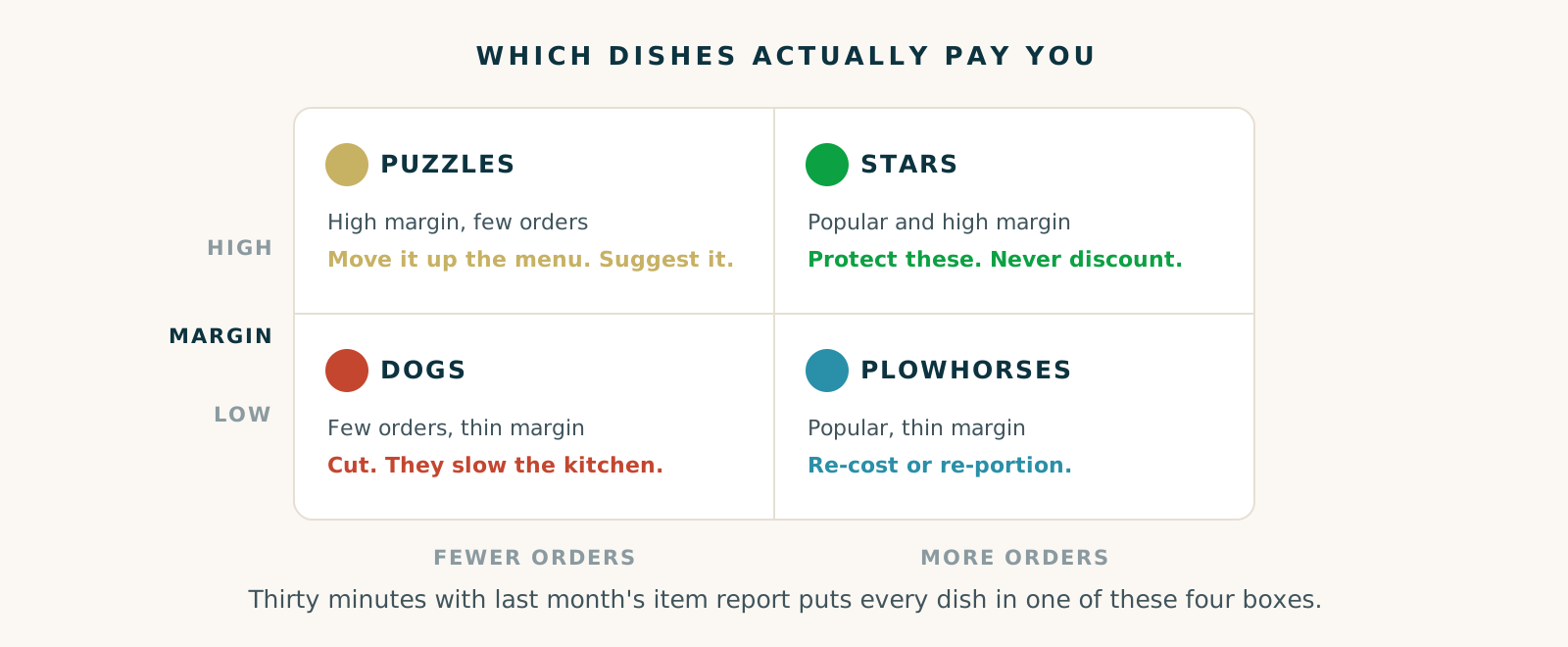
This is menu engineering, and it is simpler than it sounds. One axis is how often a dish sells. The other is what it earns you after food cost.
Stars — popular and profitable — get protected and never discounted. Puzzles earn well but nobody orders them, usually because they are buried at the bottom of page three; move them up and have staff suggest them. Plowhorses sell constantly on a thin margin, so re-cost or re-portion them rather than killing them. Dogs sell rarely and earn little, and every one you remove speeds up your kitchen.
Three dishes. That is all you need to change this month. Your restaurant analytics should give you the quantity and revenue split without exporting anything.
Takeaway: Cutting three dogs and promoting two puzzles moves your margin more than a week of posting on Instagram.
Step 3: Give your staff one line, not a script
Upselling fails in Indian restaurants because owners ask for a sales pitch and get an awkward one.
Replace the pitch with a single sentence per section, said at the right moment. After the order is taken: "Shall I get the papad and chutney started while you decide?" Before the mains land: "Another round of drinks?" It works because it is a service question, not a sale.
One line. Practised once at the pre-service briefing. That is the whole programme — and it belongs in your staff training checklist rather than in a one-off speech.
Takeaway: A single well-timed question raises the average bill more reliably than any discount ever will.
Step 4: Put the menu on the guest's phone
Here is the uncomfortable number: most of the revenue you lose is a second round nobody could order.
A guest finishes their drink at 8:40. They look for a waiter. The waiter is at another table. By 8:45 the moment has passed and they decide to just wait for the bill. That drink was yours and you never knew it existed.
A digital menu with QR ordering removes the wait entirely. The guest scans, browses the live menu, adds the drink, and it reaches the kitchen without anyone walking anywhere. Nothing about hospitality changes — your captain still does the welcome, the recommendation and the check-back. The guest simply stops being blocked at the only moment they wanted to spend more.
Takeaway: Every minute a guest cannot order is a minute they are not spending.
SEE IT ON A GUEST'S PHONE
Scan a live CurryIQ menu yourself before deciding anything. Not a video — the actual guest screen, on your phone, in about thirty seconds.
Step 5: Cut the waiting, not the eating
Table turnover is the lever everyone misunderstands. You do not rush people. You remove the dead time around their meal.
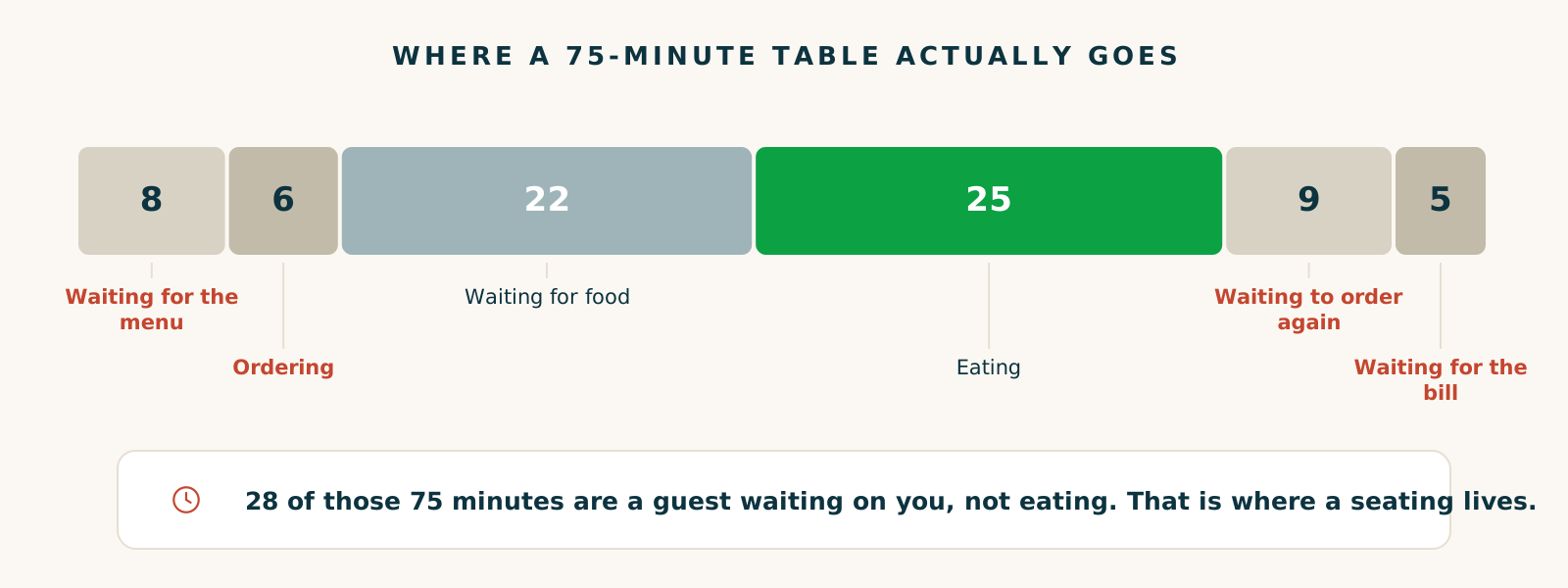
Break a 75-minute table apart and roughly 28 of those minutes are a guest waiting on you — for a menu, for someone to take the order, for someone to notice they want more, for the bill. The eating itself is 25 minutes and you should never touch it.
Take fifteen minutes out of the waiting and a table that turned twice on Saturday turns three times. That is a whole extra seating per table per night, with no new guests and no advertising.
The kitchen half of this is ticket clarity. A cook working from a kitchen display system with colour-coded ticket ageing sends food out in a different order than one working from a pile of printed slips.
Takeaway: Faster service is not rushing guests. It is deleting the gaps they never wanted.
Step 6: Stop selling what you have run out of
Nothing kills an order like being told, after ordering, that it is unavailable.
The guest has already committed emotionally. Now they have to choose again, usually settling for something cheaper, and the table's whole mood drops. Worse, on a busy Saturday it happens four or five times.
Mark items unavailable the moment the kitchen runs out, and have that change reach the printed menu, the QR menu and the aggregator listing at once. One action, every surface.
Takeaway: An item you cannot serve should disappear from everywhere in seconds, not at closing time.
FIFTEEN MINUTES, YOUR FLOOR
Bring one question to the demo: what happens when the paneer runs out? We will mark it unavailable while you watch it vanish from the guest menu on your own phone.
Step 7: Give them a reason to come back on a Tuesday
The third lever — frequency — is the one almost nobody works on, and it is the cheapest.
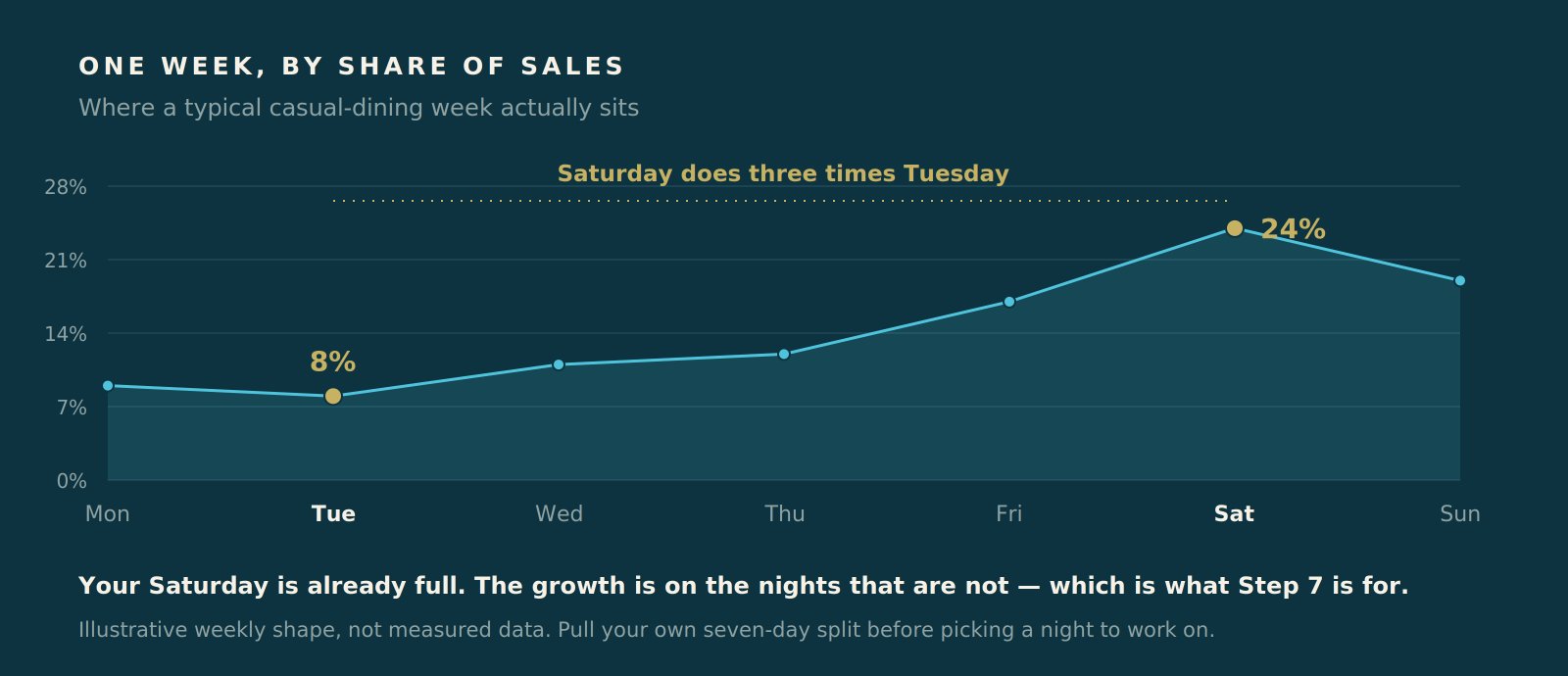
You do not need a loyalty app. You need a reason that fits a weekday. A fixed-price lunch thali that is genuinely good value. A standing Tuesday offer on your slowest category. A WhatsApp message to the fifty regulars whose numbers you already have on bills, sent once a month, saying something specific rather than "visit us".
Specific beats generic every time. "The new Himachali trout is on from Thursday" outperforms "20% off this week", because one is news and the other is a discount that trains people to wait for discounts.
Takeaway: Turning a quarterly guest into a monthly one is worth more than three new guests, and costs almost nothing.
Step 8: Check whether delivery is actually paying you
Delivery feels like extra sales. Sometimes it is extra volume at a worse margin.
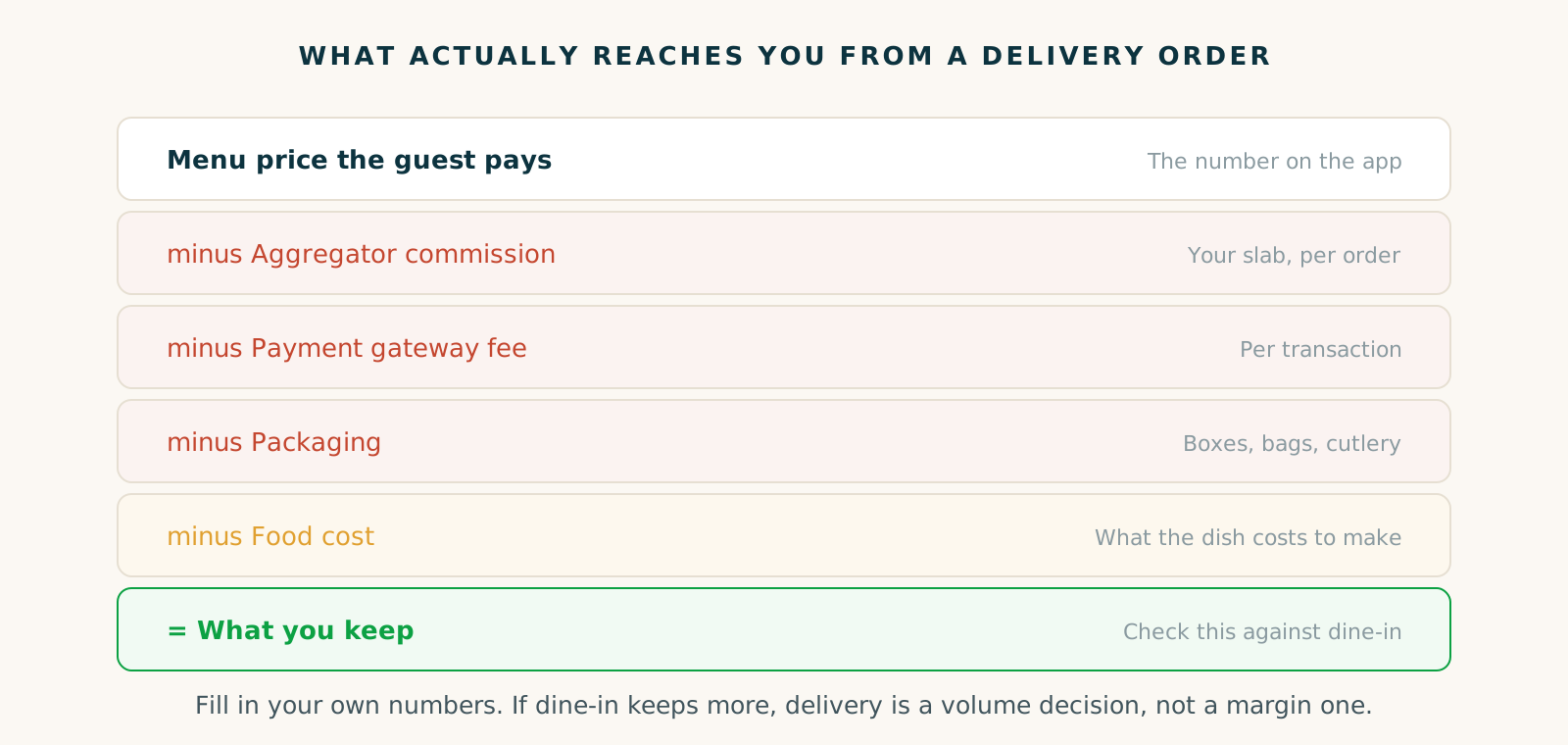
Take one real order and walk it down: menu price, minus aggregator commission at your slab, minus the payment gateway cut, minus packaging, minus food cost. What is left is what delivery actually pays you — and you should compare it against what the same dish keeps when it goes to a table.
Do this once with your own numbers. If dine-in keeps meaningfully more, delivery is a volume and visibility decision, not a margin one, and you should price your delivery menu accordingly rather than mirroring your dine-in prices. Getting the GST treatment right on both matters too, because the rates are not always the same.
Takeaway: Chase delivery with your eyes open. More orders at a loss is a faster way to go out of business, not a way to increase restaurant sales.
SIMPLE, HONEST PRICING
Billing, QR ordering, kitchen tickets and analytics from ₹499 a month. No per-table fee, no bundled hardware, cancel anytime.
Step 9: Measure what worked, then do that again
Everything above is a guess until you check it against last month.
Pick three numbers and look at them on the first of every month: average bill per table, covers per service, and your top ten items by revenue. That is it. Three numbers, ten minutes, once a month.
When the average bill rises after Step 3, you know the upsell line is working and you keep it. When it does not, you change the line rather than abandoning the idea. This is the only step that makes the other eight compound, and good POS software for restaurants should hand you all three without an export.
Takeaway: What you measure monthly is what improves. What you check once is what drifts.
How CurryIQ helps you increase restaurant sales
Most of the nine steps above need two things: knowing what actually sold, and removing the moments where a guest cannot spend. CurryIQ was built around both.
The item report that Steps 1, 2 and 9 depend on comes out of the billing system itself — quantity and revenue per dish, per shift, per day, on screen rather than in an export you open once.
QR ordering handles Step 4. Guests order the second round from their own phone, it reaches the kitchen under the right table number, and your captain's time goes to the parts of hospitality that need a person.
The kitchen display handles Step 5. Orders appear in under two seconds, colour-coded by how long they have waited, routed to the right station.
Marking an item unavailable handles Step 6 — one action that removes it from the guest menu instantly.
And all of it runs in a browser on hardware you already own, from ₹499 a month, so none of this is an equipment decision.
Frequently asked questions
How can I increase restaurant sales without advertising?
Work on average bill and repeat visits rather than new guests. Fix the three dishes losing money, add one well-timed upsell question, remove the waiting around the meal, and give regulars a specific reason to return on a weekday. Six of the nine steps in this guide need no spend at all.
How do I increase the average bill in my restaurant?
One trained question per service moment beats any discount: offer a starter while they decide, and a second round before the mains land. Then make the second round orderable without waiting for a waiter, because that is where most of it quietly disappears.
How can I increase restaurant sales in India specifically?
Three things matter more here than in the Western guides: GST treatment differs between dine-in and delivery, aggregator commission can quietly make extra volume unprofitable, and weekday lunch is usually the softest slot with the most room to grow. Work all three before spending on ads.
How long before any of this shows up in my numbers?
The menu changes in Steps 1 and 2 show up within a month because they affect every order from the day you make them. Upsell training shows up in two to three weeks. Frequency, Step 7, is the slowest and the most durable — give it a quarter.
Where to start
Do Step 1 tonight. Pull last month's item report, sort it twice, and you will have your three decisions before you close.
Then come back for Steps 2 and 3 this week. Everything after that builds on knowing which dishes actually pay you — which is why it is first.
If you want the reporting and the guest-side ordering in one place, CurryIQ does both, and the trial does not need a card.
BUILT IN INDIA, FOR INDIAN RESTAURANTS
Start with the report that answers Step 1. Billing, QR ordering, KOT routing and per-item revenue in one browser-based system. Free onboarding, no bundled hardware, cancel anytime.
Keep reading
Ready to try CurryIQ?
Start free. No credit card required. Setup in 10 minutes.